ChipApex | Global Electronic Components Supplier
SEARCH
Search Product
Search Post
— IC芯片 | 连接器 | 传感器 | 被动器件 —
Search productSearch post
— IC芯片 | 连接器 | 传感器 | 被动器件 —
Consult the customer manager about the wholesale price.
consultation hotline:86-132-6715-2157
email:[email protected]
Contact the product manager for consultation. One-stop consultation is available.
Do you want a lower wholesale price? Please send us your inquiry and we will reply immediately.
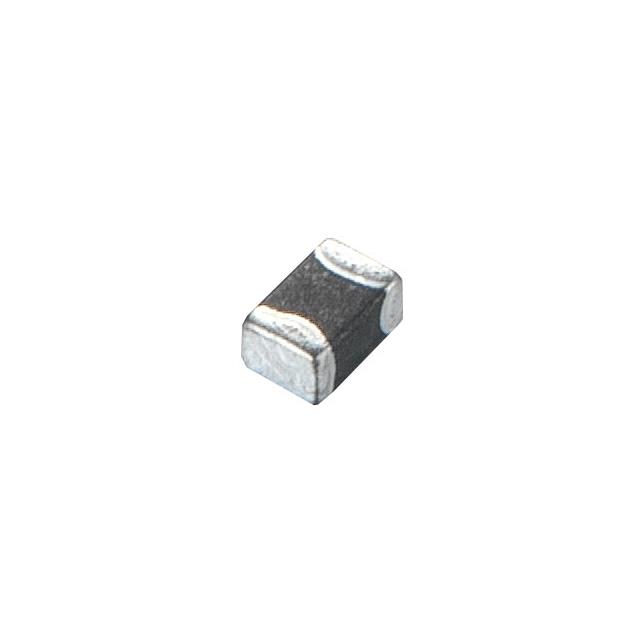
The BBBK00160808601Y00 is a multilayer ferrite chip bead from the Pulse Electronics BBBK series, designed for surface-mount technology. It features a 0603 (1608 metric) package with dimensions of 1.6 mm length and 0.8 mm width. The component provides an impedance of 600 ohms at a test frequency of 100 MHz with a tolerance of ±25%. It supports a maximum DC current rating of 300 mA and has a maximum DC resistance of 0.5 ohms. The operating temperature range spans from -55°C to +125°C.
Verify the specific manufacturer part number against official Pulse Electronics documentation to ensure authenticity. Confirm that the requested quantity aligns with standard packaging formats such as cut tape or reel. Check for any recent product change notices regarding material composition or assembly origin. Ensure compliance with RoHS directives if required by your manufacturing standards. Validate the supplier's authorization status before proceeding with acquisition.
Select this component when a low-profile 0603 footprint is required for space-constrained designs. Choose based on the 600-ohm impedance requirement at 100 MHz for targeted noise frequencies. Consider the 300 mA current rating to ensure adequate headroom for the application's DC load. Verify thermal stability requirements against the -55°C to +125°C operating range. Compare DC resistance values to minimize voltage drop in sensitive power rails.
This ferrite bead belongs to the BBBK series, which focuses on shielded multilayer chip beads for SMD applications. It shares the 0603 form factor common across Pulse's ferrite lineup but offers specific impedance and current ratings distinct from other series like BBPY or BBHV. The shielding feature differentiates it from unshielded counterparts, providing better performance in dense PCB layouts.
Cross-reference with equivalent shielded ferrite beads in the 0603 package offering 600 ohms impedance and similar current handling. Verify dimensional compatibility and terminal configuration before substitution. Ensure the alternative component meets the same temperature and impedance specifications.
 BBBK00160808601Y00
The activity of extra discounts on wholesale prices is in full swing…
Please fill in your contact information and we will send you the latest wholesale price list.