 ChipApex | Global Electronic Components Supplier
SEARCH
Search Product
Search Post
— IC芯片 | 连接器 | 传感器 | 被动器件 —
Search productSearch post
— IC芯片 | 连接器 | 传感器 | 被动器件 —
Consult the customer manager about the wholesale price.
consultation hotline:86-132-6715-2157
email:[email protected]
Contact the product manager for consultation. One-stop consultation is available.
Do you want a lower wholesale price? Please send us your inquiry and we will reply immediately.
The BCM53158XMB0KFBG is an Ethernet IC from the Broadcom RoboSwitch family, designed for high-density switching applications. It integrates eight Gigabit Ethernet ports and one Quad Small Form-factor Pluggable Gigabit Media Independent Interface (QSGMII) port, alongside two 10 Gigabit Ethernet interfaces. The device supports data rates ranging from 10 Mb/s to 10 Gb/s and complies with IEEE 802.3 standards including 10/100/1000BASE-T and 1G/2.5G/10GBASE-FX. It operates within a commercial temperature range of 0°C to +70°C using a single 1V power supply. The component utilizes an FBGA-311 surface-mount package and includes twelve transceivers with interface support for I2C, JTAG, MDIO, QSGMII, RGMII, SPI, and XFI.
Verify the specific suffix '0' against official Broadcom documentation to confirm pinout and electrical characteristics, as minor alphanumeric changes can indicate different thermal or mechanical variants. Ensure compliance with RoHS directives and check moisture sensitivity levels prior to PCB assembly. Confirm availability through authorized distributors to avoid counterfeit components.
Select this model when designing systems requiring a mix of standard Gigabit copper ports and higher-speed fiber uplinks without external PHYs. Consider the FBGA-311 package constraints during layout planning. Evaluate power budget requirements against the 1V core voltage specification and ensure adequate thermal management for the commercial temperature grade.
This component belongs to the Broadcom BCM5315x series of RoboSwitch devices, which are optimized for cost-effective, high-port-count switching solutions. The series typically targets residential gateway and small-to-medium business infrastructure markets, providing integrated switching fabric and management features to reduce system bill of materials.
The BCM53156XUB1KFBG and BCM53158XPB1KFBG are documented members of the same family. Verify functional equivalence regarding port counts and interface types before substitution, as variations in suffixes often denote differences in packaging or temperature ratings rather than logical function.
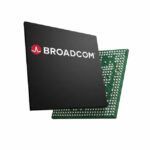 BCM53158XMB0KFBG
The activity of extra discounts on wholesale prices is in full swing…
Please fill in your contact information and we will send you the latest wholesale price list.





