 ChipApex | Global Electronic Components Supplier
SEARCH
Search Product
Search Post
— IC芯片 | 连接器 | 传感器 | 被动器件 —
Search productSearch post
— IC芯片 | 连接器 | 传感器 | 被动器件 —
Consult the customer manager about the wholesale price.
consultation hotline:86-132-6715-2157
email:[email protected]
Contact the product manager for consultation. One-stop consultation is available.
Do you want a lower wholesale price? Please send us your inquiry and we will reply immediately.
The BCR16CM-12LBAP#B01 is a standard triac manufactured by Renesas Electronics Corporation, designed for general-purpose AC control applications. It features a maximum on-state RMS current of 16 A and a repetitive peak off-state voltage of 600 V. The device utilizes a TO-220F package with an insulated tab configuration to facilitate thermal management and electrical isolation in through-hole mounting scenarios. Its gate trigger characteristics are optimized for reliable switching within industrial environments.
Verify the specific suffix #B01 against the manufacturer's latest datasheet to confirm pinout compatibility and packaging details. Ensure that the procurement channel provides original manufacturer documentation to validate authenticity. Cross-reference the Renesas part number with distributor catalogs to confirm current availability status and any potential obsolescence notices prior to finalizing orders.
Select this component when a 16 A current rating and 600 V blocking voltage are required for AC load switching. The insulated tab design makes it suitable for applications needing galvanic isolation between the control circuit and the heatsink. Consider the thermal resistance of the TO-220F package relative to the expected ambient temperature and duty cycle to ensure safe operating junction temperatures under continuous load conditions.
This triac belongs to the BCR series of power semiconductors from Renesas, which are engineered for robust performance in high-reliability industrial applications. The series typically integrates planar die technology to withstand harsh electrical stresses. As a 16 A device, it bridges the gap between lower-current logic-controlled triacs and higher-power industrial thyristors, offering a balance of drive simplicity and power handling capacity.
Direct replacements must match the 16 A RMS current, 600 V voltage rating, and TO-220F insulated package. Verify gate trigger current (Igt) and voltage (Vgt) specifications to ensure compatibility with existing drive circuits. Check for equivalent thermal resistance values to maintain system cooling efficiency without redesigning the heatsink interface.
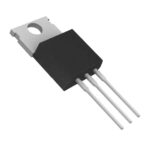 BCR16CM-12LBAP#B01
The activity of extra discounts on wholesale prices is in full swing…
Please fill in your contact information and we will send you the latest wholesale price list.





