 ChipApex | Global Electronic Components Supplier
SEARCH
Search Product
Search Post
— IC芯片 | 连接器 | 传感器 | 被动器件 —
Search productSearch post
— IC芯片 | 连接器 | 传感器 | 被动器件 —
Consult the customer manager about the wholesale price.
consultation hotline:86-132-6715-2157
email:[email protected]
Contact the product manager for consultation. One-stop consultation is available.
Do you want a lower wholesale price? Please send us your inquiry and we will reply immediately.
The BD18398EUV-ME2 is a three-channel synchronous buck DC/DC LED driver designed for automotive applications. It features an on-time topology supporting near-fixed switching frequency and fast switching duty regulation, alongside average LED current feed buck topology for precise regulation across wide input and output ranges. The device integrates internal switching FETs and supports PWM dimming with up to 1024 steps. It operates within an input voltage range of 5 V to 65 V, delivering a maximum total output current of 2700 mA (1600 mA per channel) with a maximum output voltage of 60 V. Switching frequencies reach up to 2.25 MHz, and the IC includes SPI communication capabilities.
Verify that the specific suffix ME2 matches the required automotive qualification grade and package variant. Confirm SPI pinout compatibility with the target microcontroller. Ensure thermal management solutions align with the HTSSOP-C48 package constraints under maximum load conditions. Cross-reference the datasheet revision date against the design timeline to ensure feature consistency.
Select this component when a three-channel buck driver with integrated MOSFETs and SPI control is required. It is suitable for designs needing high-resolution dimming and robust current regulation across varying input voltages. Consider the 65 V input tolerance and 2.25 MHz switching capability for efficiency optimization. Verify that the HTSSOP-C48 package fits the available PCB real estate and thermal requirements.
This part belongs to ROHM's automotive-grade LED driver portfolio, specifically engineered for complex lighting architectures. It complements other multi-channel drivers like the BD18398RUV-ME2 but offers distinct SPI integration and higher voltage tolerance. The series targets advanced vehicle lighting systems demanding precise digital control and high reliability under harsh environmental conditions.
The BD18398RUV-ME2 is a related alternative within the same family. Verify channel count, input voltage limits, and package dimensions before substitution. Ensure SPI command sets are compatible if replacing existing designs.
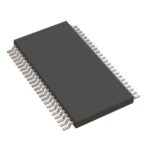 BD18398EUV-ME2
The activity of extra discounts on wholesale prices is in full swing…
Please fill in your contact information and we will send you the latest wholesale price list.





