 ChipApex | Global Electronic Components Supplier
SEARCH
Search Product
Search Post
— IC芯片 | 连接器 | 传感器 | 被动器件 —
Search productSearch post
— IC芯片 | 连接器 | 传感器 | 被动器件 —
Consult the customer manager about the wholesale price.
consultation hotline:86-132-6715-2157
email:[email protected]
Contact the product manager for consultation. One-stop consultation is available.
Do you want a lower wholesale price? Please send us your inquiry and we will reply immediately.
The BD45371G-TR is a voltage detector manufactured by ROHM Semiconductor, designed for monitoring single-input power supply lines. It features a fixed detection threshold of 3.7 V with an accuracy of ±1%. The device provides an open-drain output that goes low when the monitored voltage drops below the threshold, incorporating a manual reset function and a fixed delay time of 100 ms to prevent false triggering during power-up transients. It operates within a supply voltage range of 0.95 V to 10 V and supports a maximum operating temperature of +105 °C. Packaged in a compact SSOP-5 format, it is suitable for space-constrained embedded systems requiring reliable supervisor functionality.
Verify component authenticity through authorized distributors or direct manufacturer channels due to potential availability constraints. Confirm RoHS compliance status and specific lot codes against current datasheet revisions before integration. Ensure storage conditions adhere to moisture sensitivity levels specified in the handling guidelines to maintain package integrity and electrical performance upon installation.
Select this component when a fixed 3.7 V threshold with manual reset capability is required. Compare against the BD5237G-1 if adjustable delay times are needed instead of the fixed 100 ms delay. Consider the SSOP-5 footprint compatibility and open-drain output requirements relative to the target microcontroller's input specifications.
Part of the BD45 series from ROHM Semiconductor, focusing on single-channel voltage detectors. This series offers various threshold voltages to suit different logic families and power rails. The BD45371G-TR specifically addresses applications needing a 3.7 V trip point with manual intervention capabilities, distinguishing it from auto-reset variants in the same family.
BD5237G-1TR is listed as a recommended replacement with the same SSOP-5 package and 3.7 V threshold, though it features an adjustable delay timer instead of a fixed one.
No, it requires a manual reset signal via the dedicated reset pin to return to the active state after a fault condition.
It utilizes an open-drain output type, requiring an external pull-up resistor to define the high logic level.
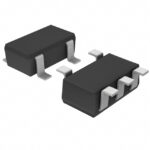 BD45371G-TR
The activity of extra discounts on wholesale prices is in full swing…
Please fill in your contact information and we will send you the latest wholesale price list.





