 ChipApex | Global Electronic Components Supplier
SEARCH
Search Product
Search Post
— IC芯片 | 连接器 | 传感器 | 被动器件 —
Search productSearch post
— IC芯片 | 连接器 | 传感器 | 被动器件 —
Consult the customer manager about the wholesale price.
consultation hotline:86-132-6715-2157
email:[email protected]
Contact the product manager for consultation. One-stop consultation is available.
Do you want a lower wholesale price? Please send us your inquiry and we will reply immediately.
The BD46411G-TR is a linear LED driver IC designed for high-efficiency constant current control in automotive and industrial lighting applications. It integrates a precision reference, error amplifier, and N-channel MOSFET output stage to regulate LED current with high accuracy. The device supports wide input voltage ranges and offers thermal shutdown and open-load protection features. Key electrical parameters include a maximum output current capability and adjustable current setting via an external resistor. It operates within specified temperature ranges suitable for harsh environments.
Verify the exact suffix 'TR' indicates tape and reel packaging when ordering. Confirm the specific package type matches your PCB footprint requirements. Ensure the operating temperature range aligns with your system's environmental conditions. Cross-reference the datasheet revision date to ensure compatibility with latest design guidelines. Validate pinout configurations against your schematic before finalizing procurement.
Select this component when high efficiency and compact size are critical due to the integrated MOSFET. Consider it for designs requiring robust protection features like thermal shutdown without external components. Evaluate the need for precise current regulation over simple switching solutions. Assess if the input voltage range covers your supply variations. Compare power dissipation capabilities against your thermal management strategy.
This part belongs to Rohm Semiconductor's line of linear LED drivers, focusing on automotive-grade reliability. It complements other models in the series offering similar functionality but with different current ratings or package options. The product line emphasizes integration to reduce bill-of-materials count and simplify design processes for lighting manufacturers.
Check for direct substitutes within the same family that may offer updated revisions or alternative packages. Verify pin-to-pin compatibility if replacing existing designs. Ensure any alternative maintains the required current accuracy and protection features. Consult official substitution guides for validated cross-references.
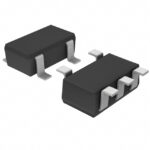 BD46411G-TR
The activity of extra discounts on wholesale prices is in full swing…
Please fill in your contact information and we will send you the latest wholesale price list.





