 ChipApex | Global Electronic Components Supplier
SEARCH
Search Product
Search Post
— IC芯片 | 连接器 | 传感器 | 被动器件 —
Search productSearch post
— IC芯片 | 连接器 | 传感器 | 被动器件 —
Consult the customer manager about the wholesale price.
consultation hotline:86-132-6715-2157
email:[email protected]
Contact the product manager for consultation. One-stop consultation is available.
Do you want a lower wholesale price? Please send us your inquiry and we will reply immediately.
The BD4720G-TR is a single-channel voltage detector manufactured by ROHM Semiconductor. It operates within a supply voltage range of 1.5 V to 5.5 V and features a fixed threshold voltage of 2.0 V for precise monitoring. The device provides an active-low reset output with an open-drain configuration, ensuring compatibility with various logic families. It functions reliably across an extended temperature range from -40°C to +75°C (TA). Designed for low-power applications, the IC draws minimal operating current, making it suitable for battery-powered systems where energy efficiency is critical.
Verify component authenticity due to announced end-of-life status. Confirm specific manufacturing lot dates as availability may be limited to existing stock or last-time buy orders. Ensure compatibility with existing board layouts when sourcing replacements. Check for updated documentation regarding final shipment deadlines. Validate that the SSOP-5 package matches design requirements before procurement.
Select this component for applications requiring a simple, low-cost voltage supervisor with a standard 2.0 V threshold. It is appropriate for systems operating between 1.5 V and 5.5 V that need basic power monitoring without complex configuration options. Consider the open-drain output if level shifting or wired-OR connections are required in the design. Evaluate thermal performance within the specified -40°C to +75°C range for environmental suitability.
This part belongs to ROHM's family of standard voltage detectors designed for general-purpose power management. These supervisors are commonly used to ensure stable operation of digital logic by detecting under-voltage conditions. The BD4720G-TR specifically targets cost-sensitive markets while maintaining accuracy. It complements other PMIC offerings by providing essential reset functionality in a compact footprint.
Check for direct pin-compatible alternatives from ROHM or other manufacturers offering similar 2.0 V thresholds. Verify that substitute components maintain the same open-drain output structure and supply voltage range. Ensure replacement parts meet the same operating temperature specifications. Review datasheets for any differences in reset delay times or hysteresis values.
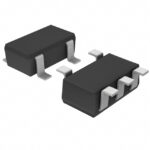 BD4720G-TR
The activity of extra discounts on wholesale prices is in full swing…
Please fill in your contact information and we will send you the latest wholesale price list.





