ChipApex | Global Electronic Components Supplier
SEARCH
Search Product
Search Post
— IC芯片 | 连接器 | 传感器 | 被动器件 —
Search productSearch post
— IC芯片 | 连接器 | 传感器 | 被动器件 —
Consult the customer manager about the wholesale price.
consultation hotline:86-132-6715-2157
email:[email protected]
Contact the product manager for consultation. One-stop consultation is available.
Do you want a lower wholesale price? Please send us your inquiry and we will reply immediately.
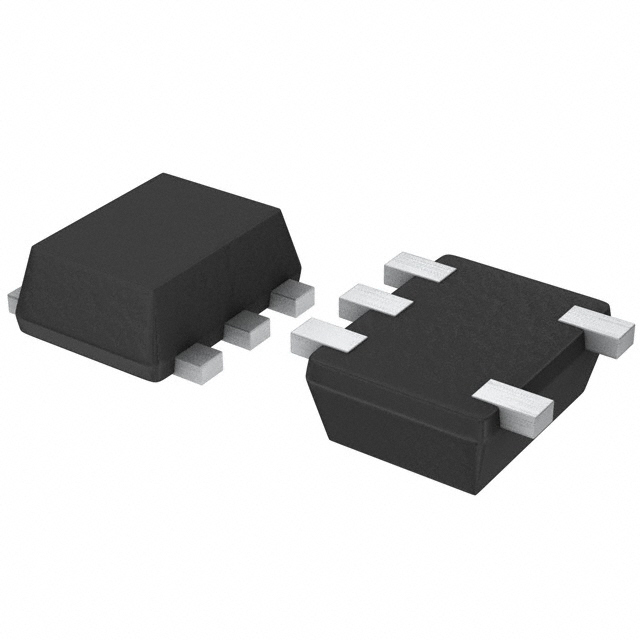
The BD4839FVE-TR is a high-voltage LED driver IC designed for automotive applications, manufactured by Rohm Semiconductor. It integrates a constant current control circuit capable of driving multiple LEDs in series configurations. The device supports input voltages up to 55V and provides precise current regulation with low ripple. Key electrical parameters include an operating voltage range of 6V to 55V, output current accuracy within ±10%, and a switching frequency typically around 200kHz. It features built-in protection mechanisms such as over-current, open-load, and short-circuit detection, ensuring reliable operation in harsh automotive environments.
Verify the exact part number suffix against official Rohm documentation to ensure correct packaging and tape/reel specifications. Confirm that the requested variant matches the required thermal performance and pinout configuration for your specific PCB layout. Cross-reference the datasheet revision date to ensure compatibility with latest design guidelines.
Select this component when designing automotive lighting systems requiring high-voltage tolerance and integrated protection. Ensure the thermal management solution aligns with the package's power dissipation capabilities. Verify that the input voltage range covers the vehicle's nominal and transient voltage conditions.
This IC belongs to Rohm's automotive-grade LED driver family, optimized for reliability under extreme temperature and voltage fluctuations. It is engineered to meet stringent automotive standards, offering a compact solution for replacing discrete LED driver designs. The FVE package facilitates efficient heat dissipation and easy integration into space-constrained automotive boards.
Check for direct cross-references from other manufacturers like ON Semiconductor or Texas Instruments if supply constraints exist. Ensure any substitute maintains the same voltage rating, current accuracy, and protection features. Verify pin-to-pin compatibility before finalizing any replacement strategy.
 BD4839FVE-TR
The activity of extra discounts on wholesale prices is in full swing…
Please fill in your contact information and we will send you the latest wholesale price list.