 ChipApex | Global Electronic Components Supplier
SEARCH
Search Product
Search Post
— IC芯片 | 连接器 | 传感器 | 被动器件 —
Search productSearch post
— IC芯片 | 连接器 | 传感器 | 被动器件 —
Consult the customer manager about the wholesale price.
consultation hotline:86-132-6715-2157
email:[email protected]
Contact the product manager for consultation. One-stop consultation is available.
Do you want a lower wholesale price? Please send us your inquiry and we will reply immediately.
The BD48E30G-TR is a standard voltage detector IC from ROHM Semiconductor, designed for monitoring supply voltages in electronic circuits. It features an N-channel open-drain output with active-low reset functionality. The device detects a threshold voltage of 3.0V with a precision of ±1%. It operates within a supply voltage range of 0.95V to 10V and supports a wide operating temperature range from -40°C to +105°C. The circuit current is typically 0.60μA at 4.8V when ON and 0.85μA when OFF. It utilizes copper wire bonding technology and is housed in a compact SSOP5 package measuring 2.9x2.8mm.
This component is designated as Not Recommended for New Designs (NRND). Engineers should verify the availability of existing stock if continuing production. For new projects, consult official documentation for recommended replacement parts that offer updated features or longer lifecycle support. Ensure all design changes comply with manufacturer guidelines for pin compatibility and electrical specifications.
Select this part only for legacy designs where the specific 3.0V threshold and SSOP5 footprint are required. Verify that the open-drain output configuration meets the downstream logic requirements. Consider the NRND status carefully; if redesigning, evaluate alternatives like the BD5230G-1 which offers similar package dimensions but enhanced features such as adjustable delay timers and lower current consumption.
The BD48E30G-TR belongs to the BD48Exx series of high-accuracy, low-current voltage detectors. This family provides fixed detection voltages ranging from 2.3V to 6.0V in 0.1V increments. These devices are characterized by their simple interface, consisting of a single input and an open-drain output, making them easy to integrate into microprocessor reset circuits without additional external components.
The BD5230G-1 is officially documented as a replacement with the same SSOP5 package. It maintains the 3.0V detection voltage but adds adjustable delay timer functionality and improved current efficiency. Designers must review the datasheet differences regarding reset delay and output drive capabilities before substituting.
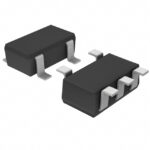 BD48E30G-TR
The activity of extra discounts on wholesale prices is in full swing…
Please fill in your contact information and we will send you the latest wholesale price list.





