 ChipApex | Global Electronic Components Supplier

SEARCH
Search Product
Search Post
— IC芯片 | 连接器 | 传感器 | 被动器件 —
Search productSearch post
— IC芯片 | 连接器 | 传感器 | 被动器件 —
Consult the customer manager about the wholesale price.
consultation hotline:86-132-6715-2157
email:[email protected]
Contact the product manager for consultation. One-stop consultation is available.
Do you want a lower wholesale price? Please send us your inquiry and we will reply immediately.
The BD48W00G-CTR is a dual-output window voltage detector manufactured by ROHM Semiconductor. It features an N-channel open-drain output and operates within a supply voltage range of up to 6 V. The device provides high detection accuracy with a threshold voltage of 1.2 V. It supports a reset active voltage range from 1.8 V to 40 V, although the maximum supply voltage is limited to 6 V. The IC is designed for surface mount installation in an SSOP-6 package. It functions across an extended temperature range from -40°C to +125°C. The component does not include manual reset, watchdog timer, or battery backup switch functionalities.
Verify the specific suffix G-CTR corresponds to the required tape and reel packaging format before ordering. Confirm that the 1.2 V threshold voltage aligns with the target circuit design requirements. Ensure the SSOP-6 package dimensions fit the designated PCB footprint. Check for any regional distribution restrictions or end-of-life notices associated with this specific manufacturer part number.
Select this component when dual independent voltage monitoring is required within a compact surface-mount package. The wide operating temperature range makes it suitable for automotive and industrial applications where thermal stability is critical. Consider the open-drain output type for compatibility with various logic levels in the host system. Evaluate the low quiescent current benefits for battery-powered or energy-sensitive designs.
This device belongs to ROHM's BD48 series of standard voltage detectors, which are engineered for high accuracy and low current consumption. The series includes variants with different detection voltages and output configurations. The BD48W00G-CTR specifically addresses applications requiring dual-window detection capabilities. It complements other PMIC solutions by providing dedicated supervisory functions for critical power rails.
Consult official ROHM documentation for direct pin-to-pin replacements or recommended upgrades. Verify electrical parameter compatibility including threshold voltage and output drive strength. Ensure the alternative component maintains the same package outline and thermal characteristics.
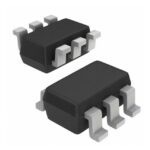 BD48W00G-CTR

The activity of extra discounts on wholesale prices is in full swing…
Please fill in your contact information and we will send you the latest wholesale price list.





