 ChipApex | Global Electronic Components Supplier

SEARCH
Search Product
Search Post
— IC芯片 | 连接器 | 传感器 | 被动器件 —
Search productSearch post
— IC芯片 | 连接器 | 传感器 | 被动器件 —
Consult the customer manager about the wholesale price.
consultation hotline:86-132-6715-2157
email:[email protected]
Contact the product manager for consultation. One-stop consultation is available.
Do you want a lower wholesale price? Please send us your inquiry and we will reply immediately.
The BD4931G-TR is a standard voltage detector IC from ROHM Semiconductor, designed for monitoring power supply levels in electronic circuits. It features a detection threshold of 3.1 V with a precision of ±1%. The device operates within a reset active voltage range of 0.95 V to 10 V and utilizes a CMOS output type. Key electrical parameters include a maximum power dissipation of 540 mW and a circuit current consumption of 0.60 μA (ON) and 0.85 μA (OFF) at Vs=4.8V. It supports an operating temperature range from -40°C to +105°C and is housed in an SSOP-5 package.
Verify component authenticity through authorized distributors or direct manufacturer channels. Confirm RoHS compliance status and check for specific packaging variants such as tape and reel options. Ensure the supplier provides valid traceability documentation. Cross-reference part numbers to avoid confusion with similar series components like BD5231G-1. Validate that the received units match the specified SSOP-5 package dimensions and pinout configuration.
Select this component when a fixed 3.1 V threshold is required for system supervision. Consider the CMOS output capability for direct interfacing with digital inputs. Evaluate the ±1% accuracy against system tolerance requirements. Compare current consumption metrics with other series members if ultra-low power is critical. Ensure the operating temperature range meets the environmental conditions of the target application.
The BD4931G-TR belongs to the BD49xxx series of standard voltage detectors produced by ROHM Semiconductor. This series is characterized by high accuracy and low current consumption, offering both N-channel open drain and CMOS output options across various detection voltages. The BD4931G-TR specifically provides a CMOS output variant with a 3.1 V threshold, fitting into the broader portfolio of supervisory circuits designed for reliable power management in compact packages.
The BD5231G-1TR is listed as a recommended replacement with the same SSOP-5 package. Verify compatibility regarding output type differences, as the substitute uses an open-drain output instead of CMOS. Check if the adjustable delay timer feature in the replacement aligns with design requirements, as the original lacks this function.
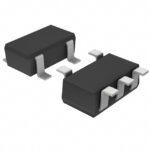 BD4931G-TR

The activity of extra discounts on wholesale prices is in full swing…
Please fill in your contact information and we will send you the latest wholesale price list.





