ChipApex | Global Electronic Components Supplier

SEARCH
Search Product
Search Post
— IC芯片 | 连接器 | 传感器 | 被动器件 —
Search productSearch post
— IC芯片 | 连接器 | 传感器 | 被动器件 —
Consult the customer manager about the wholesale price.
consultation hotline:86-132-6715-2157
email:[email protected]
Contact the product manager for consultation. One-stop consultation is available.
Do you want a lower wholesale price? Please send us your inquiry and we will reply immediately.
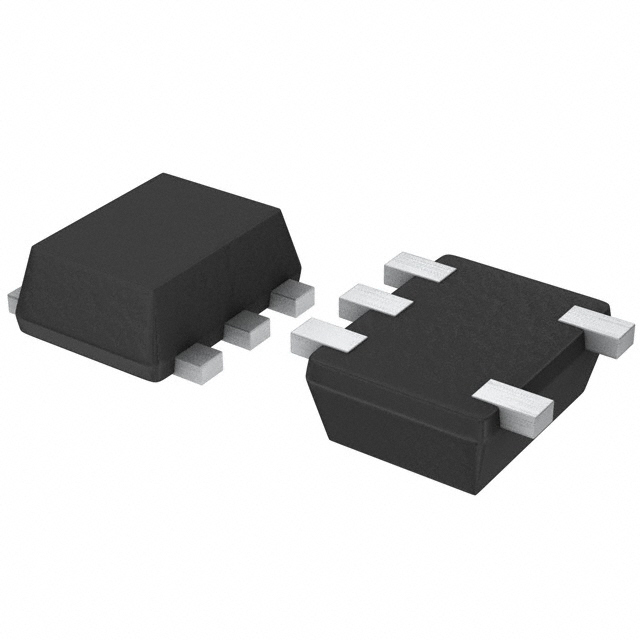
The BD4932FVE-TR is a standard voltage detector manufactured by ROHM Semiconductor, classified as a CMOS supervisory circuit. It features a typical under-voltage detection threshold of 3.2 V with a precision of ±1%. The device operates within a reset active voltage range of 0.7 to 7 V and utilizes a CMOS output type. Key electrical characteristics include a circuit current of 0.40 μA (at Vdet=4.8V) in the ON state and 0.55 μA in the OFF state. Hysteresis is defined as Vdet multiplied by 0.05. The component is housed in a VSOF-5 package and supports an operating temperature range from -40°C to +125°C.
Verify end-of-life status before procurement, as this component may be discontinued or restricted to existing customer production. Confirm RoHS compliance and specific tape-and-reel packaging requirements. Ensure design-in compatibility with replacement parts if availability is limited. Check for any regional distribution restrictions or minimum order constraints imposed by authorized distributors.
Select this part when a fixed 3.2 V threshold is required without manual reset or watchdog functionality. The CMOS output suits applications needing direct interface with digital logic. Consider the VSOF-5 package for small form factor constraints. Evaluate the low standby current for battery-operated systems. Verify that the 0.7 to 7 V reset active range covers the intended supply voltage variations.
This component belongs to the BU4932/BD49 series of standard voltage detectors from ROHM Semiconductor. These devices are designed for simple, cost-effective voltage supervision in portable and industrial applications. The series typically offers low quiescent current and compact packages, targeting general-purpose power management needs where advanced features like adjustable delays are not required.
BD5232G-1 is listed as a similar specification replacement with the same package type. Note differences in output type (open drain vs. CMOS) and reset delay capabilities. Verify pinout compatibility and electrical parameter alignment before substitution.
 BD4932FVE-TR

The activity of extra discounts on wholesale prices is in full swing…
Please fill in your contact information and we will send you the latest wholesale price list.