 ChipApex | Global Electronic Components Supplier

SEARCH
Search Product
Search Post
— IC芯片 | 连接器 | 传感器 | 被动器件 —
Search productSearch post
— IC芯片 | 连接器 | 传感器 | 被动器件 —
Consult the customer manager about the wholesale price.
consultation hotline:86-132-6715-2157
email:[email protected]
Contact the product manager for consultation. One-stop consultation is available.
Do you want a lower wholesale price? Please send us your inquiry and we will reply immediately.
The BD4953G-TR is a standard voltage detector IC from ROHM Semiconductor, designed for monitoring power supply voltages. It features a CMOS output type and operates within a reset active voltage range of 0.95V to 10V. The under-voltage detection voltage is typically 5.3V with a precision of ±1%. The device includes no manual reset or watchdog timer functions. Circuit current consumption is 0.60μA (ON) and 0.85μA (OFF) at Vs=4.8V. Hysteresis voltage is defined as Vs x 0.05. It supports an L output current of 0.4mA (LowVol) and 2mA (HighVol). The operating temperature range spans from -40°C to +105°C. The component is housed in an SSOP5 package.
Verify the specific ordering suffix and package variant against the official datasheet to ensure compatibility with design requirements. Confirm supply status as the BD4953G may be subject to lifecycle changes. Check RoHS compliance documentation for regulatory adherence. Ensure the selected variant matches the required detection voltage and output characteristics for the target application circuit.
Select this component when a CMOS output is preferred over open-drain types for direct logic interfacing. Consider the ±1% detection precision and low hysteresis settings for precise voltage monitoring needs. Evaluate the 0.60μA/0.85μA current consumption against system power budgets. Verify that the SSOP5 package fits the PCB layout constraints and thermal requirements of the final assembly.
The BD4953G-TR belongs to the BD49xxx series of standard voltage detectors from ROHM. This family focuses on high accuracy and low current consumption for portable applications. Unlike some variants in the series, this specific part utilizes a CMOS output structure. It is distinct from the BD45 series which may offer different output types like open-drain. The series generally covers detection voltages from 2.3V to 6.0V in 0.1V increments.
The BD5250G-1 is listed as a similar specification replacement. Note that the BD5250G-1 features an open-drain output instead of CMOS, has a different detection voltage (5.0V vs 5.3V), and uses an SSOP5 package. Verify electrical compatibility before substitution.
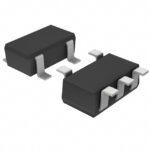 BD4953G-TR

The activity of extra discounts on wholesale prices is in full swing…
Please fill in your contact information and we will send you the latest wholesale price list.





