 ChipApex | Global Electronic Components Supplier

SEARCH
Search Product
Search Post
— IC芯片 | 连接器 | 传感器 | 被动器件 —
Search productSearch post
— IC芯片 | 连接器 | 传感器 | 被动器件 —
Consult the customer manager about the wholesale price.
consultation hotline:86-132-6715-2157
email:[email protected]
Contact the product manager for consultation. One-stop consultation is available.
Do you want a lower wholesale price? Please send us your inquiry and we will reply immediately.
The BD49E30G-TR is a standard CMOS voltage detector IC from ROHM Semiconductor, designed for supervisory circuit applications. It features a fixed detection threshold of 3.0V with a precision accuracy of ±1%. The device operates within a supply voltage range of 0.95V to 10V and delivers an active-low reset signal via a CMOS output. Key electrical parameters include a reset delay time of 100µs, low current consumption of 0.60µA in the ON state and 0.85µA in the OFF state at VS=4.8V, and a hysteresis voltage of VDET x 0.05. It functions reliably across a temperature range of -40°C to +105°C.
This component carries an NRND (Not Recommended for New Designs) status, indicating it is supported only for existing production rather than new development. Verify that the SSOP-5 package and specific 3.0V threshold align with legacy design requirements. Confirm RoHS compliance details prior to integration. Ensure supply chain stability given the non-new-design classification to avoid future obsolescence risks.
Select this part when a fixed 3.0V threshold with high accuracy is required for CMOS-based reset logic. It is appropriate for designs needing minimal current draw without manual reset or watchdog functionalities. Consider the 100µs reset delay for timing-sensitive applications. Evaluate the SSOP-5 footprint constraints against available board space. This device suits general industrial and consumer electronics where automotive qualification is not mandatory.
The BD49E30G-TR belongs to the BD49Exxx series of standard CMOS voltage detectors manufactured by ROHM Semiconductor. This family provides various detection voltages from 2.3V to 6.0V in 0.1V increments. The series is characterized by high accuracy and low power consumption, serving as a reliable solution for supervising power rails in microcontroller and logic circuits within a wide operating temperature range.
The BD5230G-1 is identified as a recommended replacement with the same package type. While both share a 3.0V detection voltage, the substitute offers slightly different electrical characteristics including adjusted current consumption and a wider reset active voltage range. Verify pin compatibility and functional equivalence before transitioning designs.
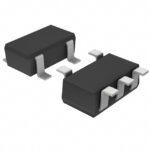 BD49E30G-TR

The activity of extra discounts on wholesale prices is in full swing…
Please fill in your contact information and we will send you the latest wholesale price list.





