ChipApex | Global Electronic Components Supplier

SEARCH
Search Product
Search Post
— IC芯片 | 连接器 | 传感器 | 被动器件 —
Search productSearch post
— IC芯片 | 连接器 | 传感器 | 被动器件 —
Consult the customer manager about the wholesale price.
consultation hotline:86-132-6715-2157
email:[email protected]
Contact the product manager for consultation. One-stop consultation is available.
Do you want a lower wholesale price? Please send us your inquiry and we will reply immediately.
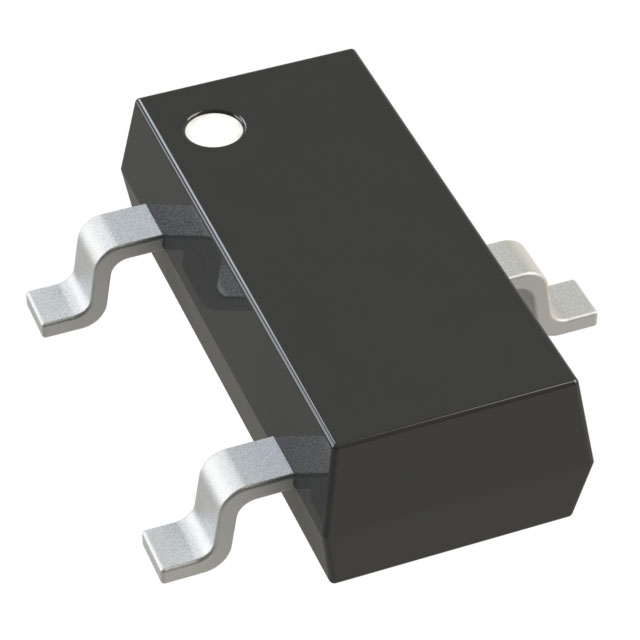
The BD49K23G-TL is a standard voltage detector IC from ROHM Semiconductor, designed for monitoring supply voltages in electronic circuits. It features a typical under-voltage detection threshold of 2.3V with a precision of ±1%. The device operates within a reset active voltage range of 0.95V to 10V and utilizes a CMOS output type. Key electrical characteristics include a circuit current of 0.60μA (on) and 0.85μA (off) at VS=4.8V. It is housed in an SSOP-3 package and supports a minimum packing quantity of 3000 units in taping format.
Verify the obsolete status and last-time-buy availability before procurement planning. Confirm that the SSOP-3 package and taping specifications match your manufacturing requirements. Ensure compliance with RoHS directives as indicated in official documentation. Cross-reference the ordering part number BD49K23G-TL with the specific datasheet revision to guarantee functional compatibility with existing designs.
Select this component when a fixed 2.3V detection threshold is required for single-channel voltage monitoring. The CMOS output is suitable for interfacing with digital logic inputs directly. Consider the low standby current for battery-operated applications where energy efficiency is critical. Verify that the operating temperature range and package size fit the thermal and spatial constraints of the target PCB layout.
This component belongs to the BD49Kxx series of highly accurate, low-current voltage detectors. The series offers various detection voltages ranging from 2.3V to 6.0V in 0.1V increments. These devices are designed for applications requiring precise supervision of power rails in portable and industrial electronics, offering a balance of accuracy and power efficiency in a small form factor.
The BD5223G-1TR is listed as a similar specification replacement. Note that the BD5223G-1TR uses an SSOP-5 package and open-drain output, differing from the BD49K23G-TL's SSOP-3 package and CMOS output. Verify pinout compatibility and output drive requirements before substitution.
 BD49K23G-TL

The activity of extra discounts on wholesale prices is in full swing…
Please fill in your contact information and we will send you the latest wholesale price list.