ChipApex | Global Electronic Components Supplier

SEARCH
Search Product
Search Post
— IC芯片 | 连接器 | 传感器 | 被动器件 —
Search productSearch post
— IC芯片 | 连接器 | 传感器 | 被动器件 —
Consult the customer manager about the wholesale price.
consultation hotline:86-132-6715-2157
email:[email protected]
Contact the product manager for consultation. One-stop consultation is available.
Do you want a lower wholesale price? Please send us your inquiry and we will reply immediately.
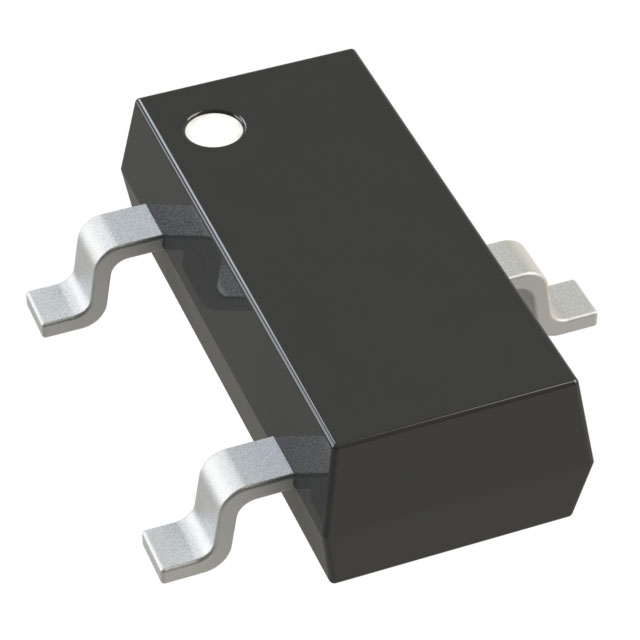
The BD49L51G-TL is a CMOS voltage detector manufactured by ROHM Semiconductor, designed for supervisory circuit applications. It features a fixed threshold voltage of 5.1 V with an accuracy of ±1%. The device operates within a supply voltage range up to 10 V and consumes a typical operating current of 900 nA. It provides a reset delay time of 100 µs and lacks manual reset or watchdog timer functions. The component is housed in a compact SSOP-3 package, suitable for surface mount installation, and supports an extended operating temperature range from -40°C to +105°C.
Verify the obsolete status and limited availability before design finalization. Confirm that the SSOP-3 package dimensions match your PCB footprint requirements. Ensure the 5.1 V threshold aligns with your system's under-voltage detection needs. Check for moisture sensitivity handling instructions during storage and assembly. Validate compatibility with your manufacturing process for surface-mount technology.
Select this component when a fixed 5.1 V threshold is required for voltage monitoring. Consider the low 900 nA operating current for battery-sensitive designs. The absence of manual reset and watchdog features simplifies circuit design but limits advanced fault handling. Verify that the 100 µs reset delay meets your system's timing constraints. Ensure the SSOP-3 package fits within your spatial limitations.
This part belongs to the BD49 series of highly accurate, low-current reset ICs from ROHM. The series includes various threshold voltages to accommodate different supply rails. The BD49L51G-TL specifically targets applications requiring precise 5.1 V detection with minimal power impact. It shares common characteristics with other members of the family, such as CMOS output and SSOP-3 packaging.
The BD5250G-1 is listed as a similar specification replacement with a 5.0 V threshold. Note differences in output type (open drain vs. CMOS) and operating current. Verify package compatibility and electrical parameter alignment before substitution.
 BD49L51G-TL

The activity of extra discounts on wholesale prices is in full swing…
Please fill in your contact information and we will send you the latest wholesale price list.