 ChipApex | Global Electronic Components Supplier

SEARCH
Search Product
Search Post
— IC芯片 | 连接器 | 传感器 | 被动器件 —
Search productSearch post
— IC芯片 | 连接器 | 传感器 | 被动器件 —
Consult the customer manager about the wholesale price.
consultation hotline:86-132-6715-2157
email:[email protected]
Contact the product manager for consultation. One-stop consultation is available.
Do you want a lower wholesale price? Please send us your inquiry and we will reply immediately.
The BD5327G-TR is a CMOS voltage detector manufactured by ROHM Semiconductor, designed for monitoring single-input supply voltages. It features a fixed detection threshold of 2.7 V with an accuracy of ±1%. The device operates within a power supply range of 1.2 V to 10 V and draws a typical operating current of 950 nA. It provides a programmable reset delay time and outputs a low-active signal via a CMOS push-pull interface. The component is housed in a compact SSOP-5 package and supports an extended industrial temperature range from -40°C to +105°C.
Verify component authenticity through authorized distributors as the part is marked End-of-Life. Confirm that the SSOP-5 package dimensions match the design footprint. Ensure the 2.7 V threshold aligns with target circuit requirements. Check RoHS compliance documentation for regulatory adherence. Validate that the CMOS output type suits the receiving logic level.
Select this component when a fixed 2.7 V threshold is required with high accuracy. Consider the CMOS push-pull output if driving capacitive loads directly. Evaluate the programmable delay feature against system startup timing needs. Compare the 950 nA quiescent current against stricter low-power alternatives if battery life is critical. Verify thermal performance within the -40°C to +105°C operational range.
This part belongs to the BD53xx series of voltage detectors from ROHM Semiconductor. It is specifically designated for applications requiring precise under-voltage monitoring without manual reset functionality. The BD5327G-TR variant offers a specific 2.7 V threshold, distinguishing it from other thresholds in the same family such as the BD5337G or BD5357G.
The BD5227G-1TR is a confirmed substitute with the same pinout and package. Note that the replacement features an open-drain output instead of CMOS push-pull. Verify compatibility with existing pull-up resistor configurations before implementation.
No, the device does not support manual reset; it relies on automatic power-on reset and undervoltage detection.
It utilizes a CMOS push-pull (totem pole) output structure.
The reset delay time is programmable/adjustable via external components.
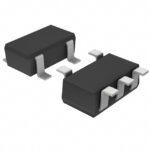 BD5327G-TR

The activity of extra discounts on wholesale prices is in full swing…
Please fill in your contact information and we will send you the latest wholesale price list.





