ChipApex | Global Electronic Components Supplier

SEARCH
Search Product
Search Post
— IC芯片 | 连接器 | 传感器 | 被动器件 —
Search productSearch post
— IC芯片 | 连接器 | 传感器 | 被动器件 —
Consult the customer manager about the wholesale price.
consultation hotline:86-132-6715-2157
email:[email protected]
Contact the product manager for consultation. One-stop consultation is available.
Do you want a lower wholesale price? Please send us your inquiry and we will reply immediately.
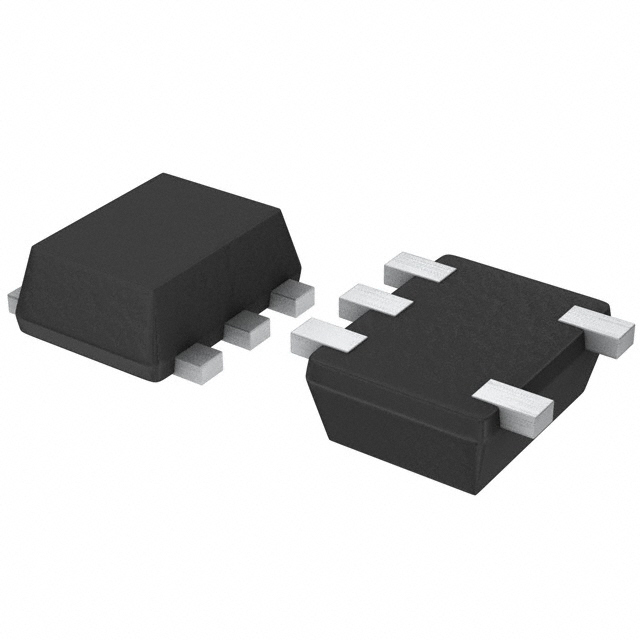
The BD5329FVE-TR is a single-channel voltage detector manufactured by ROHM Semiconductor, designed for supervisory circuit applications. It operates within a supply voltage range of 0.95 V to 10 V and features a typical under-voltage detection threshold of 2.9 V with ±1% precision. The device utilizes a CMOS output type with an active-low reset signal and includes an adjustable delay timer controlled by an external resistor. Packaged in a compact VSOF5 (1.6x1.6 mm) surface-mount format, it supports operation from -40°C to +125°C. Key electrical characteristics include a hysteresis voltage of VDET x 0.05 and low circuit current consumption.
Verify component authenticity through authorized channels as this part may be subject to obsolescence or last-time-buy status. Confirm exact ordering suffixes and packaging types against official datasheets prior to procurement. Ensure compatibility with existing PCB footprints and verify that the VSOF5 package dimensions align with assembly requirements. Cross-reference replacement options if availability is constrained.
Select this component when a CMOS output interface and externally adjustable reset delay are required. Compare performance metrics such as quiescent current and hysteresis against alternative supervisors. Ensure the 2.9 V threshold matches the target system's minimum operating voltage. Verify that the VSOF5 package fits within the designated board area and thermal constraints.
This device belongs to the BD53xx series of voltage detectors, which are characterized by low power consumption and flexible configuration options. The series supports various detection voltages and output types, catering to diverse industrial and consumer electronics needs. The BD5329FVE-TR specifically addresses applications requiring a 2.9 V threshold with adjustable timing delays.
The BD5229G-1 is identified as a recommended replacement with the same pinout. Note that the BD5229G-1 uses an SSOP5 package instead of VSOF5 and features an open-drain output rather than CMOS. Verify mechanical fit and electrical compatibility before substitution.
 BD5329FVE-TR

The activity of extra discounts on wholesale prices is in full swing…
Please fill in your contact information and we will send you the latest wholesale price list.