ChipApex | Global Electronic Components Supplier

SEARCH
Search Product
Search Post
— IC芯片 | 连接器 | 传感器 | 被动器件 —
Search productSearch post
— IC芯片 | 连接器 | 传感器 | 被动器件 —
Consult the customer manager about the wholesale price.
consultation hotline:86-132-6715-2157
email:[email protected]
Contact the product manager for consultation. One-stop consultation is available.
Do you want a lower wholesale price? Please send us your inquiry and we will reply immediately.
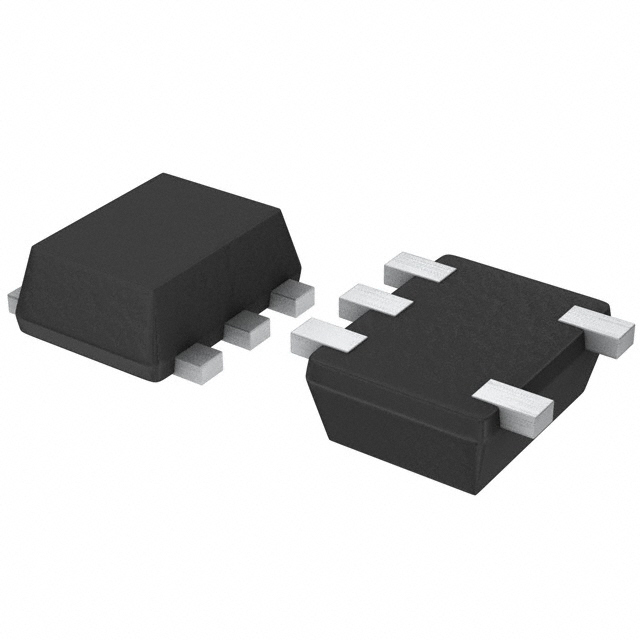
The BD5333FVE-TR is a voltage detector with adjustable delay time manufactured by ROHM Semiconductor. It features a typical under-voltage detection voltage of 3.3V and a precision of ±1%. The reset active voltage range spans from 0.95V to 10V, utilizing a CMOS output type. The device supports an adjustable delay timer and maintains a low reset active state. Circuit current is specified at 0.85μA when VDET is 4.8V. Hysteresis voltage is defined as VDET multiplied by 0.05. The L output current capabilities are 1.2mA for low voltage and 5mA for high voltage. The delay circuit resistance is 9.0MΩ. Operating temperature ranges from -40°C to 105°C.
Verify component authenticity through authorized channels due to supply status variations. Confirm package integrity upon receipt, as the VSOF5 package requires careful handling. Cross-reference datasheet revisions to ensure compatibility with specific design requirements. Validate electrical parameters against latest manufacturer specifications before integration into final products.
Consider the adjustable delay feature for timing-sensitive applications requiring precise reset sequencing. Evaluate the CMOS output capability against load requirements, noting the specific current ratings for low and high voltage states. Assess the wide reset active voltage range to ensure compatibility with varying supply conditions. Review thermal performance within the specified operating temperature range for environmental suitability.
This component belongs to the BD53xx series of voltage detectors from ROHM Semiconductor. It is designed for supervisory circuit applications where reliable voltage monitoring and controlled reset timing are essential. The VSOF5 package offers a compact solution for surface-mount assembly. Related parts in the series may offer different detection voltages or output configurations.
BD5233G-1 is listed as a recommended replacement with the same pinout. Verify electrical parameter compatibility, particularly regarding output type differences (CMOS vs Open Drain) and reset active voltage ranges before substitution.
 BD5333FVE-TR

The activity of extra discounts on wholesale prices is in full swing…
Please fill in your contact information and we will send you the latest wholesale price list.