 ChipApex | Global Electronic Components Supplier
SEARCH
Search Product
Search Post
— IC芯片 | 连接器 | 传感器 | 被动器件 —
Search productSearch post
— IC芯片 | 连接器 | 传感器 | 被动器件 —
Consult the customer manager about the wholesale price.
consultation hotline:86-132-6715-2157
email:[email protected]
Contact the product manager for consultation. One-stop consultation is available.
Do you want a lower wholesale price? Please send us your inquiry and we will reply immediately.
The BD5426EFS-E2 is a Class-D audio amplifier manufactured by ROHM Semiconductor, designed for stereo speaker applications. It delivers 10 W of output power per channel into an 8-ohm load with a single power supply voltage ranging from 10 V to 16.5 V. The device features a bridge output configuration and operates within a temperature range of -40°C to +85°C. Key electrical specifications include a fixed gain of 28 dB, a total harmonic distortion plus noise (THD+N) of 0.1%, and a quiescent current of 25 mA. It is housed in a 44-pin HTSSOP package with exposed pad.
Verify the specific suffix E2 against the manufacturer's latest documentation to confirm compliance with RoHS directives and material declarations. Ensure the ordering part number matches the required HTSSOP-44 package variant. Cross-reference the datasheet revision date to validate all electrical parameters and pin configurations before finalizing procurement orders.
Select this component when a dual-channel Class-D solution is required for 8-ohm loads at 10W per channel. The 10V to 16.5V supply range suits standard automotive and industrial single-rail systems. Consider the 44-pin HTSSOP footprint for PCB layout constraints. Verify that the 28dB fixed gain aligns with the upstream signal source levels without requiring additional external amplification stages.
This device belongs to the BD54 series of audio amplifiers from ROHM Semiconductor. The series focuses on high-efficiency Class-D architectures suitable for demanding audio environments. The BD5426EFS-E2 specifically utilizes the HTSSOP-44 package, distinguishing it from other series members that may use QFN or smaller surface-mount packages while maintaining similar core performance characteristics.
The BD5426MUV-E2 serves as a functional alternative within the same product family. Note that the MUV variant utilizes a QFN-48 package and differential output configuration, which differs from the EFS-E2's HTSSOP-44 and bridge output. Verify pinout compatibility and thermal management requirements before substituting.
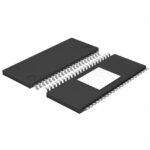 BD5426EFS-E2
The activity of extra discounts on wholesale prices is in full swing…
Please fill in your contact information and we will send you the latest wholesale price list.







