 ChipApex | Global Electronic Components Supplier
SEARCH
Search Product
Search Post
— IC芯片 | 连接器 | 传感器 | 被动器件 —
Search productSearch post
— IC芯片 | 连接器 | 传感器 | 被动器件 —
Consult the customer manager about the wholesale price.
consultation hotline:86-132-6715-2157
email:[email protected]
Contact the product manager for consultation. One-stop consultation is available.
Do you want a lower wholesale price? Please send us your inquiry and we will reply immediately.
The BD6066GU-E2 is a white LED driver IC manufactured by ROHM Semiconductor, designed for boost topology applications. It features four independent output channels capable of delivering up to 30 mA per channel. The device operates within an input voltage range of 2.7 V to 22 V and supports a switching frequency of 1 MHz. It provides adjustable output voltage with integrated overvoltage protection. The component is rated for operation between -30°C and +85°C, dissipating up to 1.1 W of power. It is housed in a surface-mount package and is currently classified as Not Recommended for New Designs.
Verify the current lifecycle status before procurement, as this component is designated as Not Recommended for New Designs. Confirm availability through authorized distributors, noting that stock may be limited or discontinued. Ensure the specific suffix matches project requirements. Review the official datasheet for any recent engineering changes or obsolescence notices prior to finalizing supply chain agreements.
Select this component for designs requiring four-channel LED driving with a wide input voltage tolerance. Consider the 1 MHz switching frequency for passive component size optimization. Evaluate thermal performance given the 1.1 W power dissipation rating. Verify compatibility with the target PCB footprint and ensure the operating temperature range meets environmental constraints. Check for alternative active parts if new design approval is required.
This part belongs to ROHM's LED lighting driver series, specifically utilizing boost converter architecture. It is categorized under PMIC LED Drivers. The product line focuses on efficient power management for portable devices. The GU-E2 suffix indicates specific packaging and compliance attributes defined by the manufacturer. It serves as a specialized solution for multi-string LED arrays in compact form factors.
Public confirmed substitute part numbers are not available in the provided documentation. As the component is marked Not Recommended for New Designs, engineers should consult the manufacturer for end-of-life guidance or identify equivalent active components with matching electrical specifications and pinout compatibility.
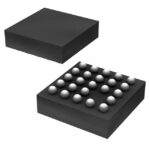 BD6066GU-E2
The activity of extra discounts on wholesale prices is in full swing…
Please fill in your contact information and we will send you the latest wholesale price list.





