 ChipApex | Global Electronic Components Supplier
SEARCH
Search Product
Search Post
— IC芯片 | 连接器 | 传感器 | 被动器件 —
Search productSearch post
— IC芯片 | 连接器 | 传感器 | 被动器件 —
Consult the customer manager about the wholesale price.
consultation hotline:86-132-6715-2157
email:[email protected]
Contact the product manager for consultation. One-stop consultation is available.
Do you want a lower wholesale price? Please send us your inquiry and we will reply immediately.
The BD6085GUL-E2 is a specialized power management IC designed for LED lighting applications. It integrates a switched capacitor charge pump topology with seven output channels and four LDOs, operating within an input voltage range of 2.7 V to 5.5 V. The device delivers up to 30 mA per channel with a maximum output voltage of 5.1 V. It functions at a switching frequency of 900 kHz and dissipates up to 1.325 W of power. Packaged in a VCSP-35 format (3.30 x 3.3 mm), it supports SMD/SMT mounting and operates reliably between -40°C and +85°C.
Verify the specific datasheet revision when ordering, as pin configurations or electrical characteristics may vary between manufacturing batches. Confirm that the VCSP-35 package dimensions align with your PCB footprint requirements. Ensure thermal management strategies account for the specified 1.325 W power dissipation limit under maximum load conditions. Cross-reference the RoHS compliance status with current regulatory standards for your target market before finalizing procurement.
Select this component when designing circuits requiring multiple independent LED drive channels from a single supply rail. It is suitable for space-constrained portable devices where minimizing external passive components is critical. Consider its 900 kHz frequency for balancing efficiency against electromagnetic interference. Evaluate the 30 mA output capability against your specific LED forward current requirements to ensure adequate brightness without exceeding device limits.
This part belongs to ROHM's specialized PMIC family focused on integrated power solutions for consumer electronics. Unlike general-purpose regulators, it combines charge pump and LDO technologies to handle complex LED driving needs. The BD6085GUL-E2 represents a consolidated approach to power management, reducing board space compared to discrete solutions. It complements other ROHM monitoring and switching ICs in comprehensive system designs.
Check for direct substitutes within the BD60xx series that offer compatible pinouts and electrical parameters. Verify if alternative packages provide equivalent functionality if mechanical constraints change. Ensure any replacement maintains the same number of output channels and current capabilities.
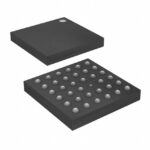 BD6085GUL-E2
The activity of extra discounts on wholesale prices is in full swing…
Please fill in your contact information and we will send you the latest wholesale price list.





