ChipApex | Global Electronic Components Supplier
SEARCH
Search Product
Search Post
— IC芯片 | 连接器 | 传感器 | 被动器件 —
Search productSearch post
— IC芯片 | 连接器 | 传感器 | 被动器件 —
Consult the customer manager about the wholesale price.
consultation hotline:86-132-6715-2157
email:[email protected]
Contact the product manager for consultation. One-stop consultation is available.
Do you want a lower wholesale price? Please send us your inquiry and we will reply immediately.
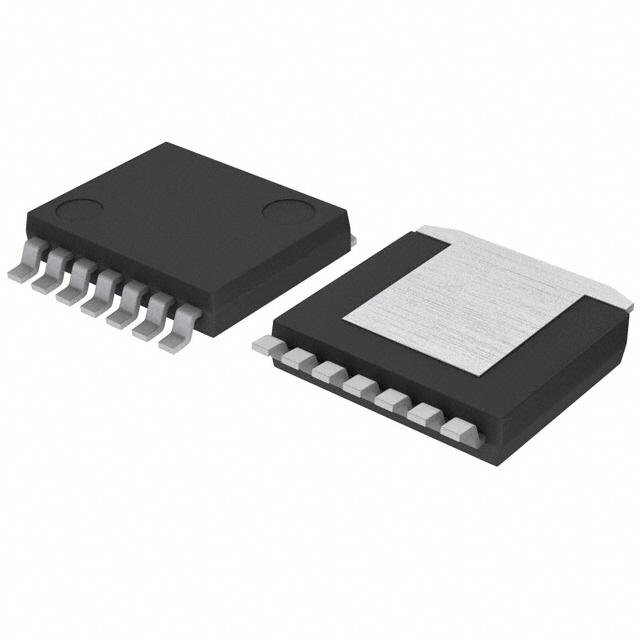
The BD6232HFP-TR is a DC brush motor driver IC from ROHM Semiconductor, designed for high-current applications with an H-bridge configuration. It supports a power supply voltage range of 6V to 32V and delivers a maximum output current of 2A. The device features a Vcc (Max) rating of 36V and utilizes power MOSFET technology for the output stage. It operates within a junction temperature range of -40°C to 150°C and is housed in an HRP7 surface-mount package. The component includes built-in protection circuits for overcurrent, overvoltage, overheating, undervoltage, and short-circuit conditions.
Verify the specific suffix (e.g., TR for tape and reel) matches your assembly requirements. Confirm that the HRP7 package dimensions align with your PCB footprint. Ensure the operating environment stays within the specified -40°C to 150°C junction temperature range. Check for RoHS compliance status if required by your manufacturing standards. Validate that the 32V max supply voltage is sufficient for your application's peak loads.
Select this component when a single H-bridge driver with up to 2A output is needed. Consider it for designs requiring low standby current and comprehensive protection features. Choose the BD6232HFP-TR over discrete solutions for reduced board space and simplified design. Verify compatibility with your microcontroller's PWM frequency range. Ensure the thermal management strategy supports the HRP7 package's heat dissipation capabilities.
The BD6232HFP-TR belongs to ROHM's series of DC brush motor drivers. It is part of the BD6232 family, which offers various packaging options. This specific variant uses the HRP7 package and comes in tape-and-reel format for automated assembly. It is designed as a cost-effective solution for medium-power motor control applications.
Check for pin-compatible alternatives within the BD623XHFP series. Verify that substitute parts meet the same 32V/2A specifications. Ensure replacement components support the same HRP7 package or have compatible footprints. Confirm that protection circuit features are equivalent or superior. Validate that the alternative maintains the same operating temperature range.
 BD6232HFP-TR
The activity of extra discounts on wholesale prices is in full swing…
Please fill in your contact information and we will send you the latest wholesale price list.