 ChipApex | Global Electronic Components Supplier
SEARCH
Search Product
Search Post
— IC芯片 | 连接器 | 传感器 | 被动器件 —
Search productSearch post
— IC芯片 | 连接器 | 传感器 | 被动器件 —
Consult the customer manager about the wholesale price.
consultation hotline:86-132-6715-2157
email:[email protected]
Contact the product manager for consultation. One-stop consultation is available.
Do you want a lower wholesale price? Please send us your inquiry and we will reply immediately.
The BD63860EFV-E2 is a bipolar stepper motor driver from ROHM Semiconductor, designed for single power supply operation within a voltage range of 16 V to 28 V. It features a CLK-IN interface and supports full, half, quarter, and eighth step modes via an integrated 3-bit DAC. The device delivers a rated output current of 2.5 A with a typical on-resistance of 0.8 Ω. It operates in an ambient temperature range of -25°C to +85°C and is housed in a 28-pin HTSSOP-B package with exposed pad for thermal dissipation.
Verify the specific suffix E2 against the manufacturer's latest datasheet to confirm pinout compatibility and electrical specifications. Ensure the ordering quantity aligns with the standard factory reel size of 2500 units or cut tape availability. Confirm RoHS compliance status and moisture sensitivity level requirements prior to final procurement decisions.
Select this component when driving bipolar stepper motors with peak currents up to 2.5 A using a single power supply. It is suitable for designs requiring eighth-step resolution and adjustable decay timing. Consider the 28-pin HTSSOP-B package constraints and thermal management needs due to the exposed pad design for adequate heat dissipation during operation.
This part belongs to the BD63860 series of stepping motor drivers manufactured by ROHM Semiconductor. It is positioned as a recommended product for new designs, offering advanced micro-stepping capabilities compared to earlier generations. The series focuses on providing high precision and energy efficiency for compact motor control applications.
The BD63843EFV is a related model in the same family but offers lower current ratings and different step resolutions. Verify pin compatibility and electrical parameters before substituting. No other direct substitute part numbers are confirmed in the provided documentation.
The device supports Full Step, Half Step, Quarter Step, and Eighth Step modes, enabled by its built-in 3-bit DAC.
It allows free setting of the current decay mode by mixing Fast Decay and Slow Decay ratios to optimize motor control characteristics.
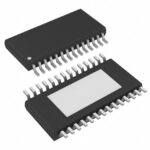 BD63860EFV-E2
The activity of extra discounts on wholesale prices is in full swing…
Please fill in your contact information and we will send you the latest wholesale price list.





