 ChipApex | Global Electronic Components Supplier
SEARCH
Search Product
Search Post
— IC芯片 | 连接器 | 传感器 | 被动器件 —
Search productSearch post
— IC芯片 | 连接器 | 传感器 | 被动器件 —
Consult the customer manager about the wholesale price.
consultation hotline:86-132-6715-2157
email:[email protected]
Contact the product manager for consultation. One-stop consultation is available.
Do you want a lower wholesale price? Please send us your inquiry and we will reply immediately.
The BD65520MUV-E2 is a high-efficiency bipolar stepping motor driver with a 36V withstand voltage. It features a rated output current of 2.0A and peak current of 2.5A. The device supports CLK-IN drive systems and offers excitation modes from FULL STEP to 1/32 STEP via built-in DAC. It allows flexible FAST DECAY and SLOW DECAY ratio settings, including MIX DECAY functionality. The package is VQFN040V6060 (6.0x6.0mm). Operating temperature ranges from -25°C to 85°C. It includes a single power supply input and SPI interface for detailed configuration.
Verify the specific suffix E2 against the manufacturer's latest datasheet to confirm exact electrical characteristics and packaging details. Ensure the application environment stays within the specified operating temperature range of -25°C to 85°C. Confirm that the load voltage does not exceed the 36V withstand limit. Check for any regional restrictions or automotive class limitations if used in vehicle-related contexts.
Select this component when a low-power bipolar stepper driver with high voltage tolerance is required. It is suitable for designs needing fine micro-stepping capabilities without external complex circuitry. The integrated SPI interface allows for dynamic adjustment of drive parameters. Consider the VQFN040V6060 package size for PCB layout constraints. Ensure the system can accommodate the CLK-IN signal requirements for proper operation.
This part belongs to ROHM Semiconductor's stepping motor driver series, designed for efficient motion control. It differs from general DC motor drivers by supporting specific bipolar PWM constant current control. The product is classified as standard grade and is not recommended for automotive use. It complements other motor controllers by offering detailed current decay optimization and multiple excitation modes.
Check ROHM's official replacement list for updated versions. No direct public substitute part numbers are confirmed in the provided documentation. Verify compatibility with existing CLK-IN signals and SPI protocols before substituting with similar drivers from other manufacturers.
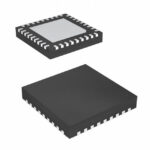 BD65520MUV-E2
The activity of extra discounts on wholesale prices is in full swing…
Please fill in your contact information and we will send you the latest wholesale price list.





