 ChipApex | Global Electronic Components Supplier
SEARCH
Search Product
Search Post
— IC芯片 | 连接器 | 传感器 | 被动器件 —
Search productSearch post
— IC芯片 | 连接器 | 传感器 | 被动器件 —
Consult the customer manager about the wholesale price.
consultation hotline:86-132-6715-2157
email:[email protected]
Contact the product manager for consultation. One-stop consultation is available.
Do you want a lower wholesale price? Please send us your inquiry and we will reply immediately.
The BD7683FJ-LBE2 is a low noise quasi-resonant control DC/DC converter IC designed for AC/DC converters. It guarantees long-term support in the industrial market and utilizes an external switching MOSFET to drive SiC devices. The component operates within a maximum switching frequency of 120 kHz and supports an input voltage range from 15 V to 27.5 V. It features a SOP-J8 package with dimensions of 4.9x6.0 mm and a thickness of 1.65 mm, ensuring suitability for high-voltage applications requiring low electromagnetic interference.
Verify the specific suffix LBE2 against the manufacturer's official documentation to confirm tape and reel packaging specifications. Ensure that the ordering information matches the exact part number required for industrial long-term supply availability. Cross-reference the datasheet revision history to validate current production status and compliance with RoHS standards before finalizing procurement orders.
Select this component when designing isolated flyback or forward converters that require low noise characteristics and compatibility with wide bandgap semiconductors. The integrated protections simplify system design by eliminating the need for external monitoring circuits. Consider the external MOSFET requirement for voltage ratings exceeding internal limits and ensure thermal management aligns with the specified operating temperature range.
This device belongs to the BD768xFJ-LB series of quasi-resonant controllers manufactured by Rohm Semiconductor. These components are specifically engineered for industrial markets, offering guaranteed long-term supply stability. The series supports flexible power designs through external switching elements and current detection resistors, providing engineers with high design freedom for various AC/DC conversion topologies.
The BD7682FJ-LBE2 is a confirmed substitute within the same product family. Both share identical quasi-resonant control architectures, SOP-J8 packaging, and industrial-grade long-term supply commitments. Verify specific electrical parameter tolerances between the two variants to ensure seamless integration into existing hardware designs without modification.
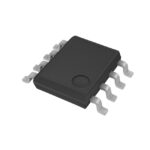 BD7683FJ-LBE2
The activity of extra discounts on wholesale prices is in full swing…
Please fill in your contact information and we will send you the latest wholesale price list.







