 ChipApex | Global Electronic Components Supplier
SEARCH
Search Product
Search Post
— IC芯片 | 连接器 | 传感器 | 被动器件 —
Search productSearch post
— IC芯片 | 连接器 | 传感器 | 被动器件 —
Consult the customer manager about the wholesale price.
consultation hotline:86-132-6715-2157
email:[email protected]
Contact the product manager for consultation. One-stop consultation is available.
Do you want a lower wholesale price? Please send us your inquiry and we will reply immediately.
The BD81A74MUV-ME2 is a four-channel white LED driver IC designed for automotive applications. It integrates a buck-boost DC/DC controller with internal current drivers, supporting an input voltage range of 4.5V to 35V and delivering up to 120mA per channel. The device features PWM dimming capability with a ratio of 10,000:1 and operates at switching frequencies between 200kHz and 2.2MHz. It is housed in a 28-VFQFN package (5.0x5.0mm) and complies with AEC-Q100 Grade 1 standards for operation between -40°C and 125°C.
Verify the specific suffix ME2 against official ROHM documentation to confirm exact manufacturing specifications and compliance status. Ensure that the procurement source provides valid traceability for AEC-Q100 qualified components intended for automotive safety analysis support. Cross-reference the part number with the latest datasheet revisions to avoid discrepancies in pinout or electrical characteristics during integration.
Select this component when designing automotive lighting circuits requiring wide input voltage tolerance and high brightness stability. The integrated buck-boost topology eliminates the need for external inductors in some configurations, simplifying layout. Consider the 28-VFQFN package size for space-constrained PCB designs. Verify thermal management requirements given the 125°C maximum operating temperature and ensure adequate heat dissipation through the exposed pad.
This device belongs to the BD81A series of automotive-grade LED drivers from ROHM Semiconductor. It is specifically engineered for white LED applications where high reliability and functional safety support are critical. The series includes variants with different channel counts and packages, but this model focuses on four-channel output within a compact footprint suitable for modern vehicle lighting architectures.
The BD81A74MUV-M is listed as an alias for this part number. Check official ROHM resources to confirm if ME2 denotes a specific tape & reel or environmental compliance variation. No other direct cross-model substitutes are documented in the provided data; verify compatibility with existing circuit designs before substituting with similar ROHM models.
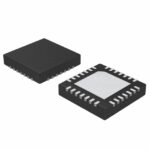 BD81A74MUV-ME2
The activity of extra discounts on wholesale prices is in full swing…
Please fill in your contact information and we will send you the latest wholesale price list.





