 ChipApex | Global Electronic Components Supplier
SEARCH
Search Product
Search Post
— IC芯片 | 连接器 | 传感器 | 被动器件 —
Search productSearch post
— IC芯片 | 连接器 | 传感器 | 被动器件 —
Consult the customer manager about the wholesale price.
consultation hotline:86-132-6715-2157
email:[email protected]
Contact the product manager for consultation. One-stop consultation is available.
Do you want a lower wholesale price? Please send us your inquiry and we will reply immediately.
The BD8967FVM-TR is a synchronous buck switching regulator manufactured by ROHM Semiconductor. It operates with an input voltage range of 4.5 V to 5.5 V and provides a fixed output voltage of 3.3 V. The device delivers a maximum output current of 0.8 A. It features a switching frequency of 1.2 MHz and incorporates current-mode PWM control for fast transient response. The component includes soft-start functionality, thermal protection, and under-voltage lockout (ULVO). It is housed in an 8-pin MSOP package and supports surface-mount installation.
Verify the exact part number suffix against official ROHM documentation to confirm pinout compatibility and electrical specifications. Confirm that the 3.3V fixed output variant matches your design requirements, as other variants in the series may offer adjustable outputs or different current ratings. Ensure the MSOP-8 package dimensions align with your PCB footprint guidelines before finalizing procurement.
Select this component when a compact solution is needed for stepping down 5V inputs to 3.3V at moderate currents. The 1.2 MHz switching frequency allows for smaller external passive components compared to lower-frequency regulators. Consider the thermal performance in enclosed spaces due to the small package size. Verify that the 0.8A output current meets the peak load demands of the target application without exceeding the junction temperature limits.
This part belongs to ROHM's PMIC - Voltage Regulators - DC DC Switching Regulators family. It is specifically designed as a high-efficiency step-down converter. The BD8967FVM-TR shares architectural similarities with other members of the BD896x series but is distinguished by its fixed 3.3V output and 0.8A current capability. It serves as a power management solution for space-constrained applications requiring reliable voltage regulation from standard 5V sources.
Direct substitutes within the same ROHM series include parts with compatible pinouts and similar electrical characteristics, such as those offering adjustable outputs if voltage flexibility is required. Cross-referencing with other manufacturers requires careful verification of input voltage ranges, output current capabilities, and package dimensions to ensure functional equivalence.
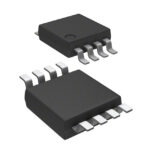 BD8967FVM-TR
The activity of extra discounts on wholesale prices is in full swing…
Please fill in your contact information and we will send you the latest wholesale price list.





