 ChipApex | Global Electronic Components Supplier
SEARCH
Search Product
Search Post
— IC芯片 | 连接器 | 传感器 | 被动器件 —
Search productSearch post
— IC芯片 | 连接器 | 传感器 | 被动器件 —
Consult the customer manager about the wholesale price.
consultation hotline:86-132-6715-2157
email:[email protected]
Contact the product manager for consultation. One-stop consultation is available.
Do you want a lower wholesale price? Please send us your inquiry and we will reply immediately.
The BD9411F-E2 is a single-channel boost DC/DC controller IC designed for white LED drivers in large LCD backlights. Manufactured by Rohm Semiconductor, it operates within an input voltage range of 9V to 35V and supports a switching frequency of 150kHz. The device features analog and PWM dimming capabilities with adjustable soft start and oscillation frequency. It includes comprehensive protection mechanisms such as over-boost, LED open/short circuit, over-voltage, and over-duty protection. Packaged in an 18-SOP surface-mount case, it functions across a temperature range of -40°C to 105°C.
Verify component status carefully before integration, as this part is designated as not recommended for new designs due to potential minimum order quantity restrictions. Confirm that existing inventory or last-time-buy options align with long-term production requirements. Ensure compatibility with current supply chain constraints and validate that alternative sourcing strategies are established if discontinuation impacts manufacturing continuity.
Select this controller for applications requiring a single-channel boost topology with integrated protection features. It suits designs needing flexible dimming control via analog or PWM signals. Consider the 18-SOP package size and thermal characteristics for PCB layout. Verify input voltage ranges match the power source and ensure the 150kHz frequency fits EMI constraints. Evaluate protection thresholds against specific LED string configurations.
This component belongs to Rohm's BD9411 series of LED driver controllers. It shares functional similarities with other single-channel boost drivers but is distinct in its 18-SOP packaging and specific protection feature set. The series targets high-reliability backlighting applications where compact design and robust fault protection are critical for maintaining display performance under varying load conditions.
Public documentation does not list confirmed substitute part numbers. As the component is not recommended for new designs, engineers must evaluate end-of-life implications thoroughly. No direct cross-reference data is available in official sources; alternative selection requires independent technical validation.
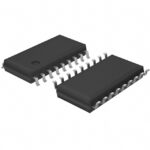 BD9411F-E2
The activity of extra discounts on wholesale prices is in full swing…
Please fill in your contact information and we will send you the latest wholesale price list.





