 ChipApex | Global Electronic Components Supplier
SEARCH
Search Product
Search Post
— IC芯片 | 连接器 | 传感器 | 被动器件 —
Search productSearch post
— IC芯片 | 连接器 | 传感器 | 被动器件 —
Consult the customer manager about the wholesale price.
consultation hotline:86-132-6715-2157
email:[email protected]
Contact the product manager for consultation. One-stop consultation is available.
Do you want a lower wholesale price? Please send us your inquiry and we will reply immediately.
The BD9423EFV-E2 is a standard boost LED lighting driver IC manufactured by ROHM Semiconductor. It features six independent output channels capable of delivering up to 400 mA per channel. The device operates within an input voltage range of 9 V to 35 V and supports adjustable output voltages. Designed for surface-mount applications, it utilizes a 40-pin HTSSOP-B package with exposed pad thermal dissipation. The integrated DC-DC regulator functions at a switching frequency of 200 kHz. It supports analog and PWM dimming control methods and maintains operation across a temperature range of -40°C to +85°C.
Verify component authenticity through authorized distribution channels prior to integration. Confirm that the specific suffix matches project requirements. Check current lifecycle status as some variants may be designated as not recommended for new designs. Ensure proper handling procedures are followed due to moisture sensitivity classification. Validate supply chain documentation against official manufacturer records.
Evaluate thermal management capabilities given the 4.7 W power dissipation rating in the specified package. Assess compatibility with existing control logic for analog or PWM dimming signals. Consider the 9 V minimum input requirement when designing the power stage. Verify that the 400 mA per channel limit aligns with target LED string configurations. Review layout guidelines for the HTSSOP-B footprint to ensure optimal heat transfer.
This component belongs to ROHM's dedicated LED driver series designed for high-efficiency lighting solutions. It integrates power management and control logic into a single compact package. The device addresses the need for precise current regulation in multi-channel applications. It replaces discrete solution architectures by consolidating boost conversion and driver functions.
BD9422EFV-E2: Offers similar functionality but may differ in switching frequency or pinout configuration. Verify electrical parameters and mechanical dimensions before substitution.
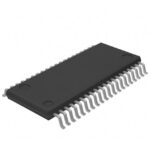 BD9423EFV-E2
The activity of extra discounts on wholesale prices is in full swing…
Please fill in your contact information and we will send you the latest wholesale price list.





