ChipApex | Global Electronic Components Supplier
SEARCH
Search Product
Search Post
— IC芯片 | 连接器 | 传感器 | 被动器件 —
Search productSearch post
— IC芯片 | 连接器 | 传感器 | 被动器件 —
Consult the customer manager about the wholesale price.
consultation hotline:86-132-6715-2157
email:[email protected]
Contact the product manager for consultation. One-stop consultation is available.
Do you want a lower wholesale price? Please send us your inquiry and we will reply immediately.
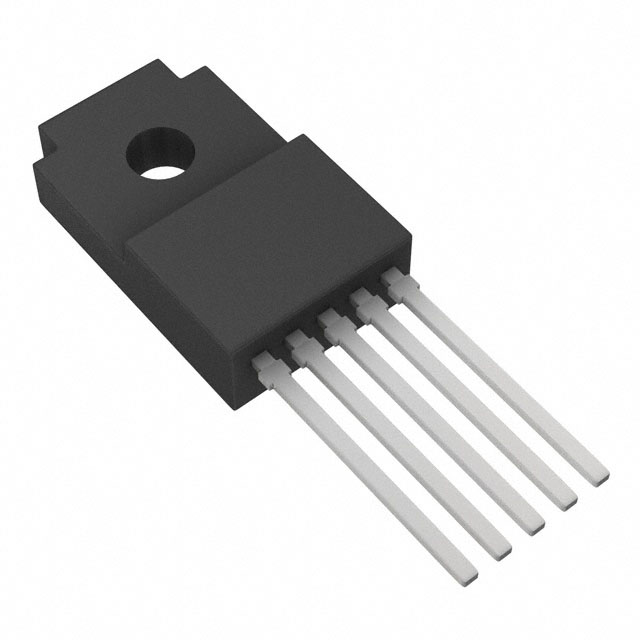
The BD9701T is a non-synchronous buck DC/DC converter manufactured by ROHM Semiconductor, designed for step-down voltage regulation. It features an input voltage range of 8V to 35V and provides a maximum output current of 1.5A. The device supports adjustable output voltages from 1V to 32V and operates with a switch frequency setting up to 0.1MHz. It includes an enable pin for power management but lacks a power good signal. The component is housed in a TO220FP-5 package, suitable for through-hole mounting, and functions within an operating temperature range of -40°C to 85°C.
Verify the specific ordering suffix and package variant when sourcing, as availability may vary by distributor. Confirm that the TO220FP-5 through-hole package matches your PCB layout requirements. Check the latest manufacturer status updates, as this part number has been associated with end-of-life or final sale designations in some records. Ensure compliance with RoHS standards if required for your specific application environment.
Select this component when a robust, through-hole mounted buck converter is needed for inputs up to 35V. It is suitable for applications where moderate output currents around 1.5A are sufficient. Consider the lack of integrated MOSFETs compared to newer synchronous models if efficiency at light loads is critical. Verify thermal dissipation capabilities given the TO220FP-5 package size and power handling characteristics.
The BD9701T belongs to ROHM's broader portfolio of switching regulators, specifically targeting versatile package solutions for stable voltage conversion. It complements other parts like the BD9703T, which offers similar electrical specifications but in different packaging options. This series addresses needs for reliable DC/DC conversion in environments requiring wide input voltage ranges and durable physical construction.
The BD9703T is a documented substitute with identical electrical specifications (8-35V input, 1.5A output) but utilizes a TO-252-5 SMD package instead of the TO220FP-5. Designers must adjust their PCB footprint and assembly process when transitioning between these two variants.
 BD9701T
The activity of extra discounts on wholesale prices is in full swing…
Please fill in your contact information and we will send you the latest wholesale price list.