ChipApex | Global Electronic Components Supplier
SEARCH
Search Product
Search Post
— IC芯片 | 连接器 | 传感器 | 被动器件 —
Search productSearch post
— IC芯片 | 连接器 | 传感器 | 被动器件 —
Consult the customer manager about the wholesale price.
consultation hotline:86-132-6715-2157
email:[email protected]
Contact the product manager for consultation. One-stop consultation is available.
Do you want a lower wholesale price? Please send us your inquiry and we will reply immediately.
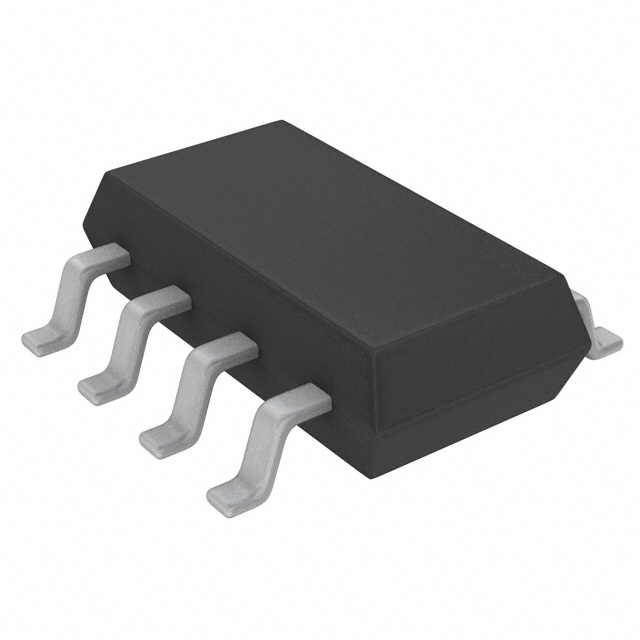
The BD9A201FP4-LBZTL is a single-channel synchronous buck DC-DC converter from ROHM Semiconductor, featuring an integrated low-on-resistance power MOSFET. It operates with an input voltage range of 2.7 V to 5.5 V and delivers a maximum output current of 2 A. The device supports adjustable output voltages between 0.8 V and 3.85 V. It utilizes current-mode control for stable phase compensation and excellent load response. Key electrical parameters include a maximum switching frequency setting of 1 MHz and a quiescent current of 10 uA. The component is housed in a compact TSOT23-8L package.
Verify the complete part number including the TL suffix to ensure correct tape-and-reel packaging configuration. Confirm that the required operating temperature range aligns with the specified -40°C to +85°C limit. Ensure compatibility with the TSOT23-8L footprint dimensions during PCB layout. Check for RoHS compliance status if required by specific regulatory standards.
Select this component when a compact solution is needed for low-voltage input applications requiring up to 2 A. The current-mode control is advantageous for designs prioritizing ease of compensation stability. The small TSOT23-8L package is suitable for space-constrained industrial and consumer boards. Consider the 1 MHz switching frequency capability for minimizing external passive component sizes.
This device belongs to ROHM's series of energy-saving DC-DC converters designed for industrial and consumer markets. It is positioned alongside similar models like the BD9E304FP4-LBZ and BD9A600MUV-E2, offering a balance of performance and size. The product line emphasizes long-term supply availability for industrial applications while utilizing advanced control methods to enhance efficiency at light loads.
Direct substitutes may include other ROHM synchronous buck converters with similar input ranges and current capabilities, such as the BD9E202FP4-Z or BD9A400MUV-E2, provided pinout and thermal requirements are compatible. Verify functional equivalence regarding control topology and protection features before substitution.
 BD9A201FP4-LBZTL
The activity of extra discounts on wholesale prices is in full swing…
Please fill in your contact information and we will send you the latest wholesale price list.