ChipApex | Global Electronic Components Supplier
SEARCH
Search Product
Search Post
— IC芯片 | 连接器 | 传感器 | 被动器件 —
Search productSearch post
— IC芯片 | 连接器 | 传感器 | 被动器件 —
Consult the customer manager about the wholesale price.
consultation hotline:86-132-6715-2157
email:[email protected]
Contact the product manager for consultation. One-stop consultation is available.
Do you want a lower wholesale price? Please send us your inquiry and we will reply immediately.
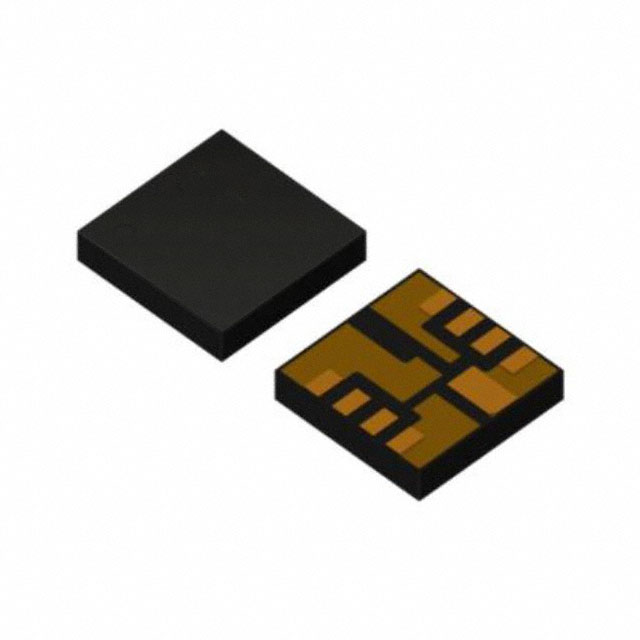
The BD9B304QWZ-E2 is a single-channel synchronous buck DC/DC converter manufactured by ROHM Semiconductor. It features an integrated power MOSFET and controller within a UMMP008AZ020 package measuring 2.0x2.0 mm with a thickness of 0.4 mm. The device supports an input voltage range from 2.7 V to 5.5 V, delivering a maximum output current of 3.0 A. The adjustable output voltage spans from 0.8 V to 4.4 V. Operating frequencies can be set up to a maximum of 2 MHz. The component operates within a temperature range of -40°C to +85°C and includes light load mode functionality for efficiency optimization.
Verify the specific suffix designation when ordering, as it may indicate tape-and-reel packaging configurations. Confirm RoHS compliance status through official documentation prior to integration. Check current lifecycle status, as availability may vary by region. Ensure compatibility with existing PCB footprints matching the UMMP008AZ020 package dimensions. Validate thermal management requirements given the backside heat dissipation design of the package.
Select this component for applications demanding high current density in minimal board space. The integrated MOSFET design reduces external component count compared to discrete solutions. Consider the 2 MHz switching frequency capability for minimizing passive component sizes. Evaluate the 2.7 V minimum input voltage against system supply variations. Assess thermal performance needs based on the 2.0x2.0 mm package's heat dissipation characteristics.
This part belongs to ROHM's BD9B series of integrated MOSFET DC-DC converters. These devices are designed for portable applications requiring high efficiency and small form factors. The series utilizes constant on-time control for fast transient response. The BD9B304QWZ-E2 specifically targets 3A output applications within a 2.7V to 5.5V input range.
Consult official ROHM documentation for qualified substitute part numbers. Verify pin-to-pin compatibility and electrical parameter alignment before substitution. Cross-reference package dimensions to ensure mechanical fit. Review updated datasheets for any functional differences between original and replacement components.
 BD9B304QWZ-E2
The activity of extra discounts on wholesale prices is in full swing…
Please fill in your contact information and we will send you the latest wholesale price list.