 ChipApex | Global Electronic Components Supplier
SEARCH
Search Product
Search Post
— IC芯片 | 连接器 | 传感器 | 被动器件 —
Search productSearch post
— IC芯片 | 连接器 | 传感器 | 被动器件 —
Consult the customer manager about the wholesale price.
consultation hotline:86-132-6715-2157
email:[email protected]
Contact the product manager for consultation. One-stop consultation is available.
Do you want a lower wholesale price? Please send us your inquiry and we will reply immediately.
The BD9C301FJ-E2 is a synchronous buck DC-DC converter IC manufactured by Rohm Semiconductor. It integrates a power MOSFET and controller in an 8-SOP-J package. The device supports an input voltage range of 4.5V to 18V and delivers a maximum output current of 3A. The adjustable output voltage spans from 0.8V to 12.6V. Operating at a switching frequency of 500kHz, it utilizes current mode control for fast transient response. The component functions within a temperature range of -40°C to 85°C and includes built-in protections such as over-current, thermal shutdown, and under-voltage lockout.
Verify the specific suffix E2 to confirm RoHS3 compliance and lead time specifications. Confirm the 8-SOP-J package dimensions match your PCB footprint requirements. Ensure the operating temperature range aligns with your system's environmental conditions. Check for availability of the BD9C301FJ-EVK-001 evaluation board for initial testing. Validate that the 500kHz switching frequency does not interfere with sensitive analog sections in your design.
Select this component when a 3A synchronous buck solution is required within a wide 4.5V to 18V input window. It is suitable for designs prioritizing transient response speed due to its current mode control topology. Consider this part for applications where space constraints favor the integrated 8-SOP-J package over discrete solutions. Ensure the load current does not exceed the 3A rating to maintain reliability and thermal performance within the specified limits.
This device belongs to the BD9C series of integrated MOSFET DC-DC converters from Rohm. These regulators utilize constant on-time control methods to achieve high efficiency and fast transient responses. The series is designed for applications demanding low standby power and compact form factors. The BD9C301FJ-E2 specifically targets mid-current applications requiring robust protection features and adjustable output voltages.
The BD9C401EFJ-E2 serves as a higher current alternative within the same family, offering 4A output capability. Both components share similar input voltage ranges and packaging styles. Verify pin compatibility and thermal requirements when substituting between these variants to ensure proper system integration.
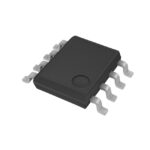 BD9C301FJ-E2
The activity of extra discounts on wholesale prices is in full swing…
Please fill in your contact information and we will send you the latest wholesale price list.





