 ChipApex | Global Electronic Components Supplier
SEARCH
Search Product
Search Post
— IC芯片 | 连接器 | 传感器 | 被动器件 —
Search productSearch post
— IC芯片 | 连接器 | 传感器 | 被动器件 —
Consult the customer manager about the wholesale price.
consultation hotline:86-132-6715-2157
email:[email protected]
Contact the product manager for consultation. One-stop consultation is available.
Do you want a lower wholesale price? Please send us your inquiry and we will reply immediately.
The BD9C401EFJ-E2 is a synchronous buck DC/DC converter manufactured by ROHM Semiconductor. It features an input voltage range of 4.5 V to 18 V and delivers a maximum output current of 4 A. The adjustable output voltage spans from 800 mV to 12.6 V. Operating at a fixed switching frequency of 500 kHz, the device utilizes current mode control for fast transient response. It includes integrated low on-resistance MOSFETs and offers a shutdown function with a typical static current of 10 µA. The component operates within a temperature range of -40°C to +85°C and is housed in an 8-HTSOP-J package.
Verify the specific suffix E2 against the manufacturer's latest datasheet to confirm RoHS compliance and lead time requirements. Ensure the ordering code matches the exact tape and reel specifications required for your assembly line. Cross-reference the pinout diagram with your PCB layout to prevent installation errors. Confirm that the ambient operating temperature aligns with the specified -40°C to +85°C range for your intended application environment.
Select this component when a 4 A output current is required from an input voltage between 4.5 V and 18 V. The fixed 500 kHz switching frequency allows for the use of smaller inductors compared to lower frequency alternatives. The adjustable output range up to 12.6 V provides flexibility for various logic levels. Consider the 8-HTSOP-J package size constraints during PCB design to ensure adequate thermal dissipation and soldering clearance.
This part belongs to the BD9C401 series of integrated MOSFET DC-DC buck converters from ROHM. The series is designed for applications requiring high efficiency and compact solutions. Similar parts in the lineup may offer different current ratings or input voltage ranges, such as the BD9G401 for higher input voltages. The E2 suffix typically denotes specific environmental or packaging variations within the product family.
Direct substitutes include other ROHM synchronous buck converters with similar electrical characteristics. Verify compatibility regarding pin configuration, thermal performance, and control loop stability before swapping components. Alternative manufacturers may offer functionally equivalent parts, but parameter matching is essential for circuit integrity.
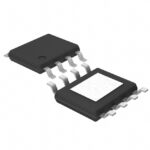 BD9C401EFJ-E2
The activity of extra discounts on wholesale prices is in full swing…
Please fill in your contact information and we will send you the latest wholesale price list.





