 ChipApex | Global Electronic Components Supplier
SEARCH
Search Product
Search Post
— IC芯片 | 连接器 | 传感器 | 被动器件 —
Search productSearch post
— IC芯片 | 连接器 | 传感器 | 被动器件 —
Consult the customer manager about the wholesale price.
consultation hotline:86-132-6715-2157
email:[email protected]
Contact the product manager for consultation. One-stop consultation is available.
Do you want a lower wholesale price? Please send us your inquiry and we will reply immediately.
The BD9C501EFJ-E2 is a synchronous buck DC/DC converter manufactured by ROHM Semiconductor. It features an input voltage range of 4.5V to 18V and delivers a maximum output current of 5A. The device supports adjustable output voltages from 800mV to 12.6V with a single output configuration. Operating at a switching frequency of 500kHz, it maintains a typical quiescent current of 10µA. The component functions within a temperature range of -40°C to +85°C and utilizes an 8-HTSOP-J package.
Verify the specific suffix E2 against the manufacturer's latest datasheet to confirm pinout compatibility and environmental compliance status. Ensure the ordering quantity aligns with standard taping specifications. Confirm that the application environment remains within the specified operating temperature limits. Cross-reference the part number with official distributor catalogs to validate authenticity and traceability before finalizing procurement orders.
Select this component when a compact synchronous buck solution is required for inputs up to 18V. The integrated MOSFET design reduces external component count compared to asynchronous alternatives. Consider the 5A current capability and 500kHz frequency for balancing size and efficiency. Verify that the load requirements do not exceed the thermal dissipation capabilities of the HTSOP-J8 package under worst-case conditions.
This part belongs to the BD9C501 series of synchronous buck converters. It shares architectural similarities with the BD9C401EFJ-E2 but offers higher current capacity. The series is designed for general-purpose applications where space saving and cost reduction are priorities. It is distinct from automotive-specific variants which may carry different qualification grades or functional safety certifications.
The BD9C401EFJ-E2 serves as a lower current alternative within the same family. Direct substitution requires verifying that the 4A rating of the substitute meets the load demands. Both parts share similar pinouts and control architectures, facilitating potential design swaps if current margins allow.
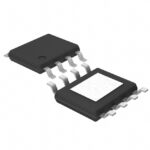 BD9C501EFJ-E2
The activity of extra discounts on wholesale prices is in full swing…
Please fill in your contact information and we will send you the latest wholesale price list.





