ChipApex | Global Electronic Components Supplier

SEARCH
Search Product
Search Post
— IC芯片 | 连接器 | 传感器 | 被动器件 —
Search productSearch post
— IC芯片 | 连接器 | 传感器 | 被动器件 —
Consult the customer manager about the wholesale price.
consultation hotline:86-132-6715-2157
email:[email protected]
Contact the product manager for consultation. One-stop consultation is available.
Do you want a lower wholesale price? Please send us your inquiry and we will reply immediately.
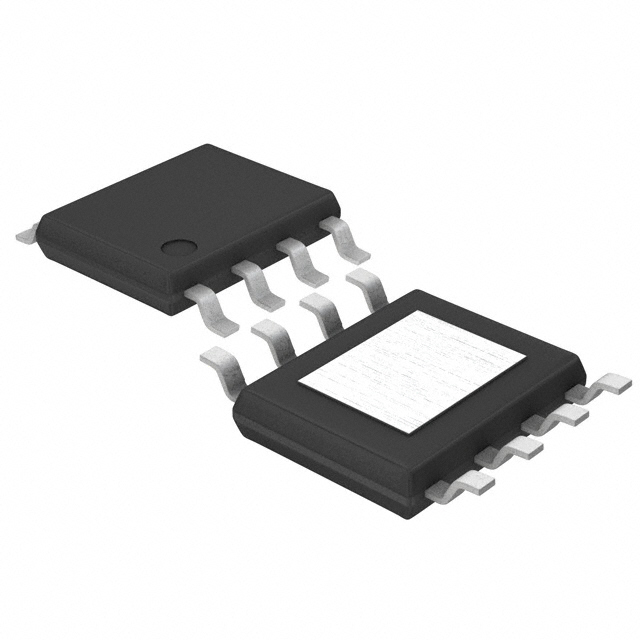
The BD9G201EFJ-LBE2 is a single-channel synchronous buck DC/DC converter manufactured by ROHM Semiconductor. It integrates a power MOSFET and controller within an 8-pin HTSOP-J package. The device supports an input voltage range of 4.5 V to 42 V, delivering a maximum output current of 1.5 A. The adjustable output voltage spans from 0.8 V to 42 V. Operating parameters include a fixed switching frequency of 300 kHz and a typical quiescent current of 10 µA. The component functions reliably across an extended temperature range from -40 °C to +105 °C.
Verify the specific suffix LBE2 against the manufacturer's latest datasheet to confirm pinout compatibility and RoHS status. Ensure the ordering part number matches the required tape-and-reel quantity specifications. Cross-reference the manufacturing date code to align with long-term supply availability requirements for industrial deployments.
Select this component when a high-input voltage buck converter is required with integrated power switching capabilities. The 1.5 A output rating suits moderate load applications where board space is constrained. Consider the 300 kHz switching frequency for balancing efficiency and external component size. Verify that the thermal performance of the HTSOP-J package meets the system's heat dissipation needs under maximum load conditions.
This part belongs to the BD9G201 series of synchronous buck converters designed for robust industrial environments. The series emphasizes high input voltage tolerance and integration to reduce external component count. The BD9G201EFJ-LBE2 variant specifically utilizes the HTSOP-J8 package to provide enhanced thermal dissipation compared to standard SOP packages, supporting reliable operation in demanding thermal conditions.
Consult official substitution lists for direct replacements. Potential alternatives may include other ROHM BD9G series devices with adjusted current ratings or input voltage ranges. Verify pin-to-pin compatibility and electrical parameter alignment before transitioning designs to substitute components.
 BD9G201EFJ-LBE2

The activity of extra discounts on wholesale prices is in full swing…
Please fill in your contact information and we will send you the latest wholesale price list.