 ChipApex | Global Electronic Components Supplier
SEARCH
Search Product
Search Post
— IC芯片 | 连接器 | 传感器 | 被动器件 —
Search productSearch post
— IC芯片 | 连接器 | 传感器 | 被动器件 —
Consult the customer manager about the wholesale price.
consultation hotline:86-132-6715-2157
email:[email protected]
Contact the product manager for consultation. One-stop consultation is available.
Do you want a lower wholesale price? Please send us your inquiry and we will reply immediately.
The BH6048KN-E2 is a DC-DC controller integrated circuit designed for LED driver applications, specifically tailored for backlight and camera flash systems. It utilizes a step-up (boost) topology to manage power delivery efficiently. The device features an I2C interface for control and dimming operations. It supports three independent outputs and can deliver a current output of up to 150mA for flash functions. Operating at a switching frequency of 1.2MHz, it ensures stable performance in compact designs. The component is housed in a 28-VFQFN package, facilitating surface-mount installation.
Verify the specific datasheet version and RoHS compliance status before integration, as the component may be marked as obsolete or end-of-life by the manufacturer. Confirm package availability and lead times through authorized distributors, noting that stock levels fluctuate. Ensure that the I2C address configuration matches your system design requirements. Cross-reference with official Rohm Semiconductor documentation to validate pinout and electrical characteristics against your schematic.
Select this component when a compact, multi-output LED driver with digital I2C control is required for flash or backlight applications. Consider its 150mA output capability and 1.2MHz switching frequency for efficiency and size constraints. Evaluate the 28-VFQFN package suitability for your PCB layout. Compare against other ROHM PMICs if higher current or different topologies are needed. Verify compatibility with your system's voltage rails and communication protocols.
The BH6048KN-E2 belongs to Rohm Semiconductor's Power Management IC (PMIC) category, specifically within the LED Driver sub-family. It is part of a series of integrated circuits designed for managing power in portable devices. Similar parts in this family may offer variations in output count, current capacity, or interface options, but share the core boost topology and I2C control architecture typical of ROHM's LED driver solutions.
Check for direct substitutes from Rohm with compatible pinouts and specifications. Verify if alternative LED drivers support similar I2C interfaces and boost topologies. Ensure replacement components meet the same thermal and electrical requirements for flash and backlight applications.
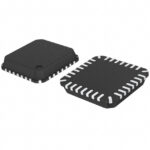 BH6048KN-E2
The activity of extra discounts on wholesale prices is in full swing…
Please fill in your contact information and we will send you the latest wholesale price list.





