 ChipApex | Global Electronic Components Supplier

SEARCH
Search Product
Search Post
— IC芯片 | 连接器 | 传感器 | 被动器件 —
Search productSearch post
— IC芯片 | 连接器 | 传感器 | 被动器件 —
Consult the customer manager about the wholesale price.
consultation hotline:86-132-6715-2157
email:[email protected]
Contact the product manager for consultation. One-stop consultation is available.
Do you want a lower wholesale price? Please send us your inquiry and we will reply immediately.
The BM2P053 is a PWM type AC/DC converter IC from ROHM Semiconductor, designed for low-power electrical converters. It integrates a 650V MOSFET and a high-voltage start circuit to simplify design for both isolated and non-isolated applications. The device operates with an input voltage range of 8.9V to 26V and features a fixed switching frequency of 65kHz. It utilizes current mode control for cycle-by-cycle current limiting, ensuring excellent bandwidth and transient response. The component supports light load frequency reduction and burst operation to maintain high efficiency at low loads.
Verify the specific package variant, as the BM2P053 is available in DIP7 packaging. Confirm RoHS compliance status and ensure the ordering suffix matches the required tape-and-reel or tube configuration if applicable. Cross-reference the manufacturer's latest datasheet to confirm pinout compatibility and thermal characteristics before finalizing procurement specifications.
Select the BM2P053 for applications requiring integrated high-voltage switching capabilities without external discrete MOSFETs. Its fixed 65kHz frequency and current mode control make it suitable for designs prioritizing transient response and EMI management through built-in frequency modulation. Ensure the external current detection resistor values align with the controller's sensing thresholds for optimal performance.
The BM2P053 belongs to the BM2PXX3 series of AC/DC PWM converters from ROHM Semiconductor. This series is engineered to provide optimized systems for devices incorporating power sockets, emphasizing low standby power consumption and design flexibility. The integration of the 650V MOSFET reduces component count and board space compared to solutions using external switches.
Yes, the BM2P053 supports both isolated and non-isolated device configurations, allowing for flexible power supply design.
The BM2P053 uses current mode control, which provides cycle-by-cycle current limiting and contributes to excellent bandwidth and transient response.
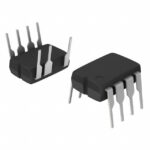 BM2P053

The activity of extra discounts on wholesale prices is in full swing…
Please fill in your contact information and we will send you the latest wholesale price list.





