 ChipApex | Global Electronic Components Supplier

SEARCH
Search Product
Search Post
— IC芯片 | 连接器 | 传感器 | 被动器件 —
Search productSearch post
— IC芯片 | 连接器 | 传感器 | 被动器件 —
Consult the customer manager about the wholesale price.
consultation hotline:86-132-6715-2157
email:[email protected]
Contact the product manager for consultation. One-stop consultation is available.
Do you want a lower wholesale price? Please send us your inquiry and we will reply immediately.
The BM2P104H-Z is an AC/DC converter IC from ROHM Semiconductor, designed for PWM DC/DC conversion with integrated switching MOSFETs. It features a DIP-7 package and supports both isolated and non-isolated topologies. The device operates within a VCC voltage range of 10.9V to 30V and includes a built-in 650V starter circuit. Key electrical parameters include a maximum drain voltage (Vmax) of 730V, a switch frequency selectable at 65kHz, 100kHz, or 130kHz, and a maximum duty cycle of 82%. It functions reliably between -40°C and +105°C.
Verify the specific switch frequency configuration required for your application, as the BM2P104H-Z supports multiple frequencies including 65kHz, 100kHz, and 130kHz. Confirm that the 730V maximum drain voltage rating aligns with your circuit's peak voltage stresses. Ensure the DIP-7 package dimensions fit your PCB layout constraints. Check official datasheets for detailed thermal management requirements given the operating temperature range up to 105°C.
Select the BM2P104H-Z when designing AC/DC converters requiring integrated high-voltage components and flexible switching frequency options. Its current mode control offers superior transient response compared to voltage mode alternatives. The inclusion of light-load burst operation makes it suitable for applications demanding high efficiency across varying load conditions. Consider its suitability for both isolated and non-isolated architectures depending on specific insulation requirements.
The BM2P104H-Z belongs to ROHM's series of AC/DC PWM DC/DC converter ICs. This family targets various consumer and industrial products needing efficient power conversion. Unlike some variants restricted to non-isolated use, this model supports both isolated and non-isolated configurations, offering greater design flexibility for different power supply architectures.
Public confirmed substitute part numbers are not available in the provided documentation. Consult ROHM Semiconductor's official resources for potential cross-references or newer generation replacements.
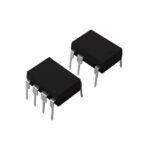 BM2P104H-Z

The activity of extra discounts on wholesale prices is in full swing…
Please fill in your contact information and we will send you the latest wholesale price list.





