 ChipApex | Global Electronic Components Supplier

SEARCH
Search Product
Search Post
— IC芯片 | 连接器 | 传感器 | 被动器件 —
Search productSearch post
— IC芯片 | 连接器 | 传感器 | 被动器件 —
Consult the customer manager about the wholesale price.
consultation hotline:86-132-6715-2157
email:[email protected]
Contact the product manager for consultation. One-stop consultation is available.
Do you want a lower wholesale price? Please send us your inquiry and we will reply immediately.
The BM2P137QK-Z is a non-isolated PWM DC/DC converter IC with an integrated switching MOSFET. It features a fixed switching frequency of 100 kHz and supports an input voltage range from 10.6 V to 14.05 V. The device incorporates an 800 V super junction MOSFET and a built-in starter circuit. Key electrical parameters include a maximum drain voltage of 800 V, an on-resistance of 7.5 Ω, and an operating temperature range of -40 °C to +105 °C. It utilizes current mode control for per-cycle current limiting and includes soft start and thermal shutdown functions.
Verify the specific suffix 'Z' indicates the correct packaging format, which is documented as tube with a factory pack quantity of 2000 units. Confirm that the component meets RoHS standards as indicated in the specifications. Ensure the application environment remains within the specified operating temperature range of -40 °C to +105 °C. Check for any regional compliance requirements relevant to standard-grade industrial components.
Select this IC for non-isolated AC/DC conversion where high efficiency and compact size are priorities. The integrated 800 V MOSFET eliminates the need for external high-voltage switches. Current mode control ensures stable performance under varying load conditions. The fixed 100 kHz frequency simplifies filter design while frequency hopping aids in meeting EMI regulations without complex shielding.
This component belongs to the BM2P series of AC/DC converters manufactured by ROHM Semiconductor. The series focuses on achieving high efficiency and miniaturization through integrated power MOSFETs and comprehensive protection circuits. The BM2P137QK-Z specifically targets non-isolated applications, offering a solution for reducing light-load power consumption while maintaining robust performance in standard-grade electronic equipment.
The BM2P137QKF is a related variant within the same family, distinguished primarily by its SOP-8 package and tape-and-reel packaging instead of the DIP-7K tube format. Both share identical electrical characteristics, including the 800 V rating and 100 kHz frequency. Designers should verify pin compatibility and thermal dissipation requirements when substituting between these package types.
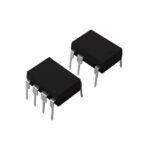 BM2P137QK-Z

The activity of extra discounts on wholesale prices is in full swing…
Please fill in your contact information and we will send you the latest wholesale price list.





