 ChipApex | Global Electronic Components Supplier

SEARCH
Search Product
Search Post
— IC芯片 | 连接器 | 传感器 | 被动器件 —
Search productSearch post
— IC芯片 | 连接器 | 传感器 | 被动器件 —
Consult the customer manager about the wholesale price.
consultation hotline:86-132-6715-2157
email:[email protected]
Contact the product manager for consultation. One-stop consultation is available.
Do you want a lower wholesale price? Please send us your inquiry and we will reply immediately.
The BM2P181S-Z is a non-isolated PWM DC/DC converter IC designed for AC/DC applications. It integrates a switching MOSFET and control circuitry in a 7-lead DIP package. The device operates with an input voltage range of 12V to 20.68V and features a fixed switching frequency of 25kHz. It supports a maximum duty cycle of 45% and draws a typical operating supply current of 500µA. The component functions within a temperature range of -40°C to +105°C and provides a single positive output configuration.
Verify the specific suffix 'Z' indicates RoHS3 compliance as documented by Rohm Semiconductor. Confirm the 7-DIPK package dimensions match the target footprint requirements. Ensure the application input voltage remains within the specified 12V to 20.68V range to maintain stable operation. Check for any regional export classification restrictions associated with the ECCN code EAR99.
Select this component when a non-isolated topology is acceptable and space constraints favor a through-hole DIP package. The 25kHz switching frequency allows for larger passive components compared to higher-frequency alternatives, which may simplify EMI filtering in low-cost designs. Consider the 650V drain rating if transient voltages are present, though the input range is limited. Evaluate thermal performance given the 105°C maximum junction temperature limit.
This part belongs to Rohm's BM2P series of integrated AC/DC converters. Unlike isolated variants such as the BM2P0161, this model is specifically optimized for non-isolated buck topologies. It shares architectural similarities with other members like the BM2P151S-Z but differs in switching frequency and input voltage specifications. The series targets cost-sensitive applications where galvanic isolation is not required.
Direct pin-compatible substitutes within the same series include the BM2P151S-Z and BM2P141W-Z. Note that these alternatives operate at different switching frequencies (65kHz vs 25kHz) and have distinct maximum input voltage ratings. Verify that the external passive components are suitable for the new frequency before substitution.
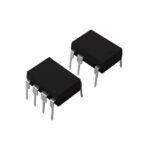 BM2P181S-Z

The activity of extra discounts on wholesale prices is in full swing…
Please fill in your contact information and we will send you the latest wholesale price list.





