 ChipApex | Global Electronic Components Supplier

SEARCH
Search Product
Search Post
— IC芯片 | 连接器 | 传感器 | 被动器件 —
Search productSearch post
— IC芯片 | 连接器 | 传感器 | 被动器件 —
Consult the customer manager about the wholesale price.
consultation hotline:86-132-6715-2157
email:[email protected]
Contact the product manager for consultation. One-stop consultation is available.
Do you want a lower wholesale price? Please send us your inquiry and we will reply immediately.
The BMT1612XH14 is a high sound pressure electromagnetic buzzer manufactured by BeStar Technologies, Inc. This component is designed for external driving circuits and features an 8-pin surface-mount configuration with specific pin assignments including VCC, GND, IN, and NC terminals. It operates on a DC voltage supply and utilizes an internal oscillator to generate audible tones without requiring complex external control logic. The device is constructed with durable materials suitable for industrial environments and offers reliable performance in applications demanding clear acoustic signaling.
Verify the exact pinout configuration and operating voltage requirements against your specific circuit design before procurement. Ensure that the driving circuit can provide sufficient current to meet the buzzer's operational specifications. Confirm compliance with relevant environmental regulations such as RoHS if required for your target market. Check for any specific handling precautions during assembly due to the surface-mount package type.
Select this component when high acoustic output is required in a compact form factor. Consider the operating voltage range and current consumption to ensure compatibility with your power supply. Evaluate the mounting orientation and acoustic path requirements for optimal sound projection. Compare alternative models from the same manufacturer if different frequency or voltage options are needed.
This part belongs to the BeStar Technologies electromagnetic buzzer series, which focuses on providing reliable audio signaling solutions. The company specializes in components for consumer electronics and industrial applications. The BMT1612XH14 represents their surface-mount offerings, designed to replace traditional through-hole buzzers in modern PCB layouts.
Check for direct replacements within the BeStar product line that share identical pinouts and electrical characteristics. Verify that any substitute component meets the same sound pressure level and voltage requirements. Ensure mechanical dimensions are compatible with existing PCB footprints.
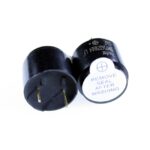 BMT1612XH14

The activity of extra discounts on wholesale prices is in full swing…
Please fill in your contact information and we will send you the latest wholesale price list.





