 ChipApex | Global Electronic Components Supplier
SEARCH
Search Product
Search Post
— IC芯片 | 连接器 | 传感器 | 被动器件 —
Search productSearch post
— IC芯片 | 连接器 | 传感器 | 被动器件 —
Consult the customer manager about the wholesale price.
consultation hotline:86-132-6715-2157
email:[email protected]
Contact the product manager for consultation. One-stop consultation is available.
Do you want a lower wholesale price? Please send us your inquiry and we will reply immediately.
The BOS1211AQR is a fully integrated piezo motor driver manufactured by Boreas Technologies, designed for haptic feedback and sensing applications. It operates on a 9V to 16V supply voltage and supports load voltages up to 120V. The device utilizes Power MOSFET technology and features an SPI interface for digital control. Packaged in a 24-VFQFN (4x4 mm) with an exposed pad, it is rated for automotive use under AEC-Q100 standards and functions within a junction temperature range of -40°C to 150°C.
Verify the specific suffix 'AQR' corresponds to the required package variant and quality grade. Confirm that the 24-VFQN footprint matches the PCB layout design. Ensure the SPI communication protocol aligns with the host controller specifications. Validate that the 9V-16V supply range meets the system power requirements. Check for any specific ordering codes related to tape and reel quantities.
Select this component when a compact, automotive-grade solution for piezo actuation is required. The integrated nature reduces external component count compared to discrete solutions. The SPI interface allows for precise digital control of the drive waveform. Consider the 120V load capability for high-voltage piezo elements. The wide operating temperature range suits demanding environmental conditions.
This part belongs to the Boreas Technologies portfolio of piezo haptic drivers. It is distinct from the BOS1921 series, which typically operates at lower supply voltages (3V to 5.5V). The BOS1211AQR is specifically engineered for higher voltage piezo applications requiring robust automotive reliability and digital integration.
Publicly confirmed substitute part numbers are not available in the provided documentation. Designers should consult the manufacturer directly for qualified alternatives or cross-reference options based on pin compatibility and electrical specifications.
It is designed specifically for piezo motors and actuators.
Yes, it is qualified to the AEC-Q100 standard for automotive use.
It uses a Serial Peripheral Interface (SPI) for digital control and configuration.
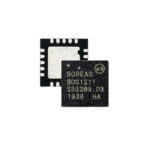 BOS1211AQR
The activity of extra discounts on wholesale prices is in full swing…
Please fill in your contact information and we will send you the latest wholesale price list.





