 ChipApex | Global Electronic Components Supplier
SEARCH
Search Product
Search Post
— IC芯片 | 连接器 | 传感器 | 被动器件 —
Search productSearch post
— IC芯片 | 连接器 | 传感器 | 被动器件 —
Consult the customer manager about the wholesale price.
consultation hotline:86-132-6715-2157
email:[email protected]
Contact the product manager for consultation. One-stop consultation is available.
Do you want a lower wholesale price? Please send us your inquiry and we will reply immediately.
The bq2201SNG4 is a CMOS SRAM Nonvolatile Controller Unit designed for 3-volt battery-backup applications. It converts standard CMOS SRAM into nonvolatile read/write memory by monitoring the 5V VCC input and forcing the conditioned chip-enable output inactive during out-of-tolerance conditions. The device switches external SRAM from the VCC supply to one of two 3V backup supplies during power failure. It features less than 10ns chip-enable propagation delay, write-protect control, and supports 5% or 10% supply operation via the THS pin.
Verify the specific package option against the datasheet ordering information: SN denotes an 8-pin narrow SOIC, while S indicates a 16-pin SOIC. Confirm that the temperature range suffix matches the required operating environment, as N specifies industrial grade (-40°C to +85°C) compared to the commercial range. Ensure the design accommodates the recommended DC operating conditions for both VCC and backup cell voltages.
Select this controller when designing systems that require seamless transition between a 5V main supply and 3V lithium backup cells. Consider the threshold select pin configuration to determine whether 5% or 10% supply tolerance detection is needed. Evaluate the package availability based on board space constraints, choosing between the 8-pin and 16-pin SOIC options depending on the number of unused pins required for layout flexibility.
The bq2201 series serves as a dedicated interface component for preserving volatile memory contents during power interruptions. It integrates precision comparators and switching devices to manage power transitions without software intervention. This family enables cost-effective nonvolatile memory solutions by utilizing widely available standard CMOS SRAM components alongside primary lithium batteries.
Check for footprint compatibility if substituting between the 8-pin (SN) and 16-pin (S) variants, as pin assignments differ significantly. Verify that any alternative controller maintains the sub-10ns propagation delay requirement to ensure proper timing with the target SRAM device.
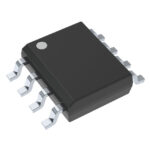 BQ2201SNG4
The activity of extra discounts on wholesale prices is in full swing…
Please fill in your contact information and we will send you the latest wholesale price list.





