 ChipApex | Global Electronic Components Supplier
SEARCH
Search Product
Search Post
— IC芯片 | 连接器 | 传感器 | 被动器件 —
Search productSearch post
— IC芯片 | 连接器 | 传感器 | 被动器件 —
Consult the customer manager about the wholesale price.
consultation hotline:86-132-6715-2157
email:[email protected]
Contact the product manager for consultation. One-stop consultation is available.
Do you want a lower wholesale price? Please send us your inquiry and we will reply immediately.
The BQ2205LYPWG4 is a gas gauge IC from Texas Instruments designed for single-cell lithium-ion and lithium-polymer batteries. It features an integrated analog-to-digital converter (ADC) for precise voltage and current sensing, enabling accurate state-of-charge (SoC) and remaining capacity calculations. The device supports programmable parameters to adapt to specific battery chemistries and configurations. It includes hardware protection mechanisms against over-voltage, under-voltage, and over-current conditions. Communication with the host system is facilitated via a standard I2C interface, allowing for real-time monitoring and control of the battery pack status.
Verify the exact suffix 'PWG4' corresponds to the specified TSSOP-16 package and lead-free RoHS compliance when ordering. Confirm that the design-in documentation matches the specific battery chemistry parameters required for your application. Ensure the I2C address configuration aligns with your system's bus architecture to avoid conflicts.
Select this component when high accuracy in state-of-charge estimation is critical for single-cell Li-ion or Li-Po applications. It is suitable for designs requiring integrated protection without external comparators. Consider the I2C interface compatibility with your host processor. Evaluate the need for programmable parameters to optimize performance for your specific battery cell characteristics.
This part belongs to the BQ2205 series of gas gauges, which are widely used in portable electronics. The series is known for its balance of accuracy and ease of integration. The BQ2205 family typically offers solutions for monitoring battery health and predicting remaining runtime, serving as a key component in battery management systems for mobile devices.
Check for direct pin-to-pin replacements within the BQ2205 family, such as other variants with different package options or temperature ranges. Verify if newer generations from Texas Instruments offer improved accuracy or additional features while maintaining software compatibility. Consult official substitution guides for any functional differences in protection thresholds or communication protocols.
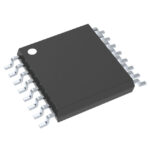 BQ2205LYPWG4
The activity of extra discounts on wholesale prices is in full swing…
Please fill in your contact information and we will send you the latest wholesale price list.





