 ChipApex | Global Electronic Components Supplier
SEARCH
Search Product
Search Post
— IC芯片 | 连接器 | 传感器 | 被动器件 —
Search productSearch post
— IC芯片 | 连接器 | 传感器 | 被动器件 —
Consult the customer manager about the wholesale price.
consultation hotline:86-132-6715-2157
email:[email protected]
Contact the product manager for consultation. One-stop consultation is available.
Do you want a lower wholesale price? Please send us your inquiry and we will reply immediately.
The BQ3285ESS is a CMOS real-time clock (RTC) and calendar integrated circuit manufactured by Texas Instruments, housed in a 24-pin SSOP package. It operates within a supply voltage range of 4.5 V to 5.5 V and supports an operating temperature range of 0°C to +70°C. The device provides a 100-year calendar with automatic leap-year adjustment, time-of-day tracking in 12- or 24-hour formats, and 242 bytes of general nonvolatile static RAM. It features a multiplexed address/data bus interface compatible with Intel and Motorola architectures, three maskable interrupt sources, and a programmable square-wave output.
The BQ3285ESS component has reached the end-of-life stage, with official discontinuation notices dated January 16, 2017. Current availability is restricted to surplus stock held by third-party distributors such as Rochester Electronics, LLC. Verification of authenticity and lot traceability is critical when sourcing from secondary markets due to the absence of direct manufacturer support.
Select the BQ3285ESS only for designs requiring a 5V logic interface and multiplexed bus compatibility. Ensure the system design accommodates the 24-SSOP surface-mount package dimensions. Verify that the host processor can handle the specific AS/DS strobe timing requirements defined in the datasheet. Consider the BQ3285L variant if the target system operates at 3V instead of 5V.
The BQ3285ESS belongs to the bq3285E/L family of real-time clocks. The 'ESS' suffix specifically denotes the 24-SSOP plastic package variant of the bq3285E model, which is optimized for 5V operation. This part is functionally equivalent to the DS1285 and closely matches the pin configuration of the MC146818A, facilitating drop-in replacements in legacy designs.
Publicly confirmed substitute part numbers are not available in the provided documentation. Due to the discontinued status, designers should evaluate modern RTCs with I2C or SPI interfaces, ensuring voltage level translation and software driver modifications are accounted for in the redesign process.
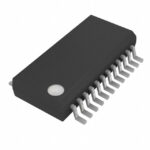 BQ3285ESS
The activity of extra discounts on wholesale prices is in full swing…
Please fill in your contact information and we will send you the latest wholesale price list.





