 ChipApex | Global Electronic Components Supplier
SEARCH
Search Product
Search Post
— IC芯片 | 连接器 | 传感器 | 被动器件 —
Search productSearch post
— IC芯片 | 连接器 | 传感器 | 被动器件 —
Consult the customer manager about the wholesale price.
consultation hotline:86-132-6715-2157
email:[email protected]
Contact the product manager for consultation. One-stop consultation is available.
Do you want a lower wholesale price? Please send us your inquiry and we will reply immediately.
The bq4822Y is a non-volatile 65,536-bit SRAM module organized as 8192 words by 8 bits, integrating a real-time clock (RTC), CPU supervisor, and internal lithium battery. It operates on a +5V supply with an operating temperature range of 0°C to +70°C. The device features automatic power-fail deselection, write protection, and data retention for at least 10 years in the absence of external power. Key electrical parameters include a typical standby current of 3 mA and an operating current of 55 mA. The RTC counts hundredths of seconds through years in BCD format, with software calibration capabilities.
This component is classified as Obsolete by Texas Instruments. Production has been discontinued, and it is no longer recommended for new designs. Verification of availability should focus on existing stock or lifetime buy options if applicable, as standard manufacturing channels are inactive.
Designers should consider this part only for maintenance of legacy systems. The device requires a +5V supply and operates within a 0°C to +70°C temperature range. Ensure compatibility with 28-pin DIP sockets, as it is designed to replace industry-standard SRAMs in these form factors without special write timing requirements.
The bq4822Y belongs to the bq4822 family of RTC modules. It combines static RAM with clock/calendar functions and microprocessor reset capabilities. The module is housed in a 28-pin plastic DIP package, providing a direct replacement solution for standard 8K x 8 SRAMs while adding non-volatile timekeeping and system supervision features.
No public confirmed substitute part numbers are listed in the documentation. As the device is obsolete, designers must evaluate alternative NVSRAM or RTC+RAM solutions that meet the specific interface and pinout requirements of the original design.
When VCC falls below the power-fail detect voltage, the device automatically deselects and switches to the internal lithium battery. This maintains data for at least 10 years at 25°C.
The clock accuracy is tested to be within 20 ppm, or approximately 1 minute per month at 25°C. Software calibration bits allow adjustment for temperature-induced frequency shifts.
The watchdog timer monitors microprocessor activity. If not reset within the programmed timeout period, it asserts the INT or RST pin. The timeout period is determined by a multiplier and resolution bits in the watchdog register.
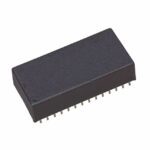 BQ4822YMA-70
The activity of extra discounts on wholesale prices is in full swing…
Please fill in your contact information and we will send you the latest wholesale price list.





