 ChipApex | Global Electronic Components Supplier
SEARCH
Search Product
Search Post
— IC芯片 | 连接器 | 传感器 | 被动器件 —
Search productSearch post
— IC芯片 | 连接器 | 传感器 | 被动器件 —
Consult the customer manager about the wholesale price.
consultation hotline:86-132-6715-2157
email:[email protected]
Contact the product manager for consultation. One-stop consultation is available.
Do you want a lower wholesale price? Please send us your inquiry and we will reply immediately.
The bq4850Y is a non-volatile SRAM module integrating 524,288 words by 8 bits of static RAM with an accessible real-time clock (RTC). It features an internal lithium battery and quartz crystal. The device operates at +5V with a typical standby current of 3 mA. Data retention is guaranteed for a minimum of 10 years without power. It includes automatic power-fail deselection and write protection when VCC falls below the power-fail detect voltage of 4.37V typical. The RTC counts seconds through years in BCD format using dual-port registers updated once per second.
Verify that the internal battery remains disconnected until the first application of VCC to ensure maximum capacity. Confirm that the system design accommodates the 32-pin DIP module dimensions and pinout compatibility with industry-standard 512K x 8 SRAM sockets.
Select this component when a combined non-volatile memory and real-time clock solution is required in a single package. Ensure the operating environment stays within the 0°C to +70°C temperature range. Verify that the 5V supply voltage meets the recommended operating conditions of 4.5V to 5.5V.
The bq4850Y is part of Texas Instruments' RTC Module family designed to directly replace industry-standard SRAMs. It fits into many EPROM and EEPROM sockets without special write timing requirements. The device eliminates limitations on the number of write cycles associated with traditional non-volatile memories.
The datasheet notes pin-compatibility with industry-standard 512K x 8 SRAMs. No specific substitute part numbers are listed in the provided documentation.
The bq4850Y offers onboard software clock calibration. Users can adjust calibration bits in the control register to compensate for frequency shifts due to temperature, achieving greater than ±1 minute per month accuracy.
When VCC falls below the power-fail detect voltage (VPFD), the device automatically deselects and write-protects itself. The internal battery switches on to preserve data, and outputs go high impedance.
The clock registers are dual-port. To prevent reading data in transition, users can set the read bit (D6) in the control register to 1 to halt updates. Once the frozen time is retrieved, the bit should be reset to 0 to resume updates.
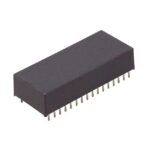 BQ4850YMA-85
The activity of extra discounts on wholesale prices is in full swing…
Please fill in your contact information and we will send you the latest wholesale price list.





