 ChipApex | Global Electronic Components Supplier
SEARCH
Search Product
Search Post
— IC芯片 | 连接器 | 传感器 | 被动器件 —
Search productSearch post
— IC芯片 | 连接器 | 传感器 | 被动器件 —
Consult the customer manager about the wholesale price.
consultation hotline:86-132-6715-2157
email:[email protected]
Contact the product manager for consultation. One-stop consultation is available.
Do you want a lower wholesale price? Please send us your inquiry and we will reply immediately.
The BQ4850YMA-85N is a non-volatile SRAM module integrating a 512K x 8 static RAM array with an internal real-time clock (RTC), quartz crystal, and lithium battery. It provides 4,194,304 bits of storage organized as 524,288 words by 8 bits. The device operates on a single +5V supply (4.5V to 5.5V) with a typical standby current of 3mA. It features automatic power-fail detection at 4.37V typical, ensuring data retention for at least 10 years in battery-backup mode. The RTC counts seconds through years in BCD format, accessible via dual-port registers at addresses 7FFF8h–7FFFFh.
Verify the specific ordering suffix against the manufacturer's latest documentation to confirm package type and speed grade. Confirm that the internal battery is disconnected until first power application, as shipped from the factory. Ensure design accounts for the accumulated data-retention time starting from initial VCC application.
Select this component when a system requires both high-density volatile memory and precise timekeeping in a single footprint. The device replaces industry-standard SRAMs and fits into many EPROM and EEPROM sockets. Consider the 85ns access time and the need for software-based clock calibration to maintain accuracy within ±1 minute per month across operating temperatures.
This part belongs to the bq4850Y family of Real-Time Clock Modules. The 'MA' suffix denotes the A-type 32-pin DIP module package. The '-85' indicates the 85ns speed grade. The 'N' suffix typically denotes a lead-free or RoHS-compliant variant, though specific environmental compliance details should be verified in the official datasheet.
The device is designed to directly replace industry-standard 512K x 8 SRAMs. Verify pin compatibility with existing SRAM footprints. Note that the bq4850Y includes additional control logic and registers; ensure firmware does not inadvertently overwrite the RTC registers located at the top of the address space.
The bq4850Y offers onboard software clock calibration. Users can adjust calibration bits in the control register to compensate for frequency shifts caused by temperature changes, achieving greater than ±1 minute per month accuracy.
The internal coin cell is electrically isolated when shipped from the factory to maximize battery capacity. The battery remains disconnected until the first application of VCC.
A power-fail-detect circuit automatically deselects the device and switches to the internal battery source when VCC falls below the switch-over voltage (typical 3V). Outputs become high impedance, and the SRAM is write-protected to preserve data integrity.
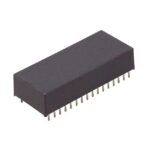 BQ4850YMA-85N
The activity of extra discounts on wholesale prices is in full swing…
Please fill in your contact information and we will send you the latest wholesale price list.





